In a report published on November 15, 2026, ChainCatcher’s Hu Tao said Bitcoin had fallen to $62,199 early that morning, down 8.9% in 24 hours and 16.3% over the week. Hu described it as the lowest price since July 2026 and more than 50% below its all-time high. The article does not identify a single trigger; it argues that political, interest-rate, fund-flow and corporate-treasury pressures overlapped.
Policy and interest-rate expectations
Hu linked part of the sell-off to the November 4 U.S. midterm election, reporting that Democrats won both chambers of Congress and that Bitcoin briefly fell below $76,000 when the result became clear. In Hu’s account, investors then reassessed the prospects for the proposed CLARITY Act and the possibility of tighter crypto regulation. The bill was a policy prospect in this account, not an enacted rule.
The article also reported that October U.S. inflation rose 0.4% month over month, versus an expected 0.3%, while nonfarm payrolls increased by 165,000, against expectations of roughly 65,000. Hu said Federal Reserve Governor Christopher Waller subsequently predicted a 50-basis-point rate increase. Citing CME FedWatch, the article put market pricing for a 25-basis-point December increase at 88.5% and for a larger increase at 11.5%. These were forecasts and market expectations as reported on November 15, not a December rate decision.
Hu’s interpretation is that higher rates would raise the cost of leveraged positions and weigh on both Bitcoin and growth stocks. The article also connects weakness in AI shares to concerns about financing costs, data-center investment and potential regulatory costs. That cross-market transmission is the author’s explanation for the decline, rather than an established cause of any particular Bitcoin price move.
Fund flows and treasury companies
Citing Farside Investors, Hu reported approximately $1.07 billion in net outflows from U.S. spot Bitcoin ETFs over the five trading days from November 9 to 13, alongside about $399 million from Ether ETFs. The article said BlackRock’s IBIT had recorded net outflows for 11 consecutive trading days. It also cited Coinbase Institutional data showing the combined circulating supply of USDT, USDC and DAI down $11.5 billion over the preceding 30 days. Hu treats those figures as signs of reduced available capital, though they do not by themselves establish why Bitcoin fell.
The report described a possible reversal in the financing cycle for companies holding crypto assets. It said on-chain monitoring showed listed miner MARA sold 13,597 BTC over six weeks, for approximately $1.1 billion, and that MARA said it would continue selling. Hu also cited financing pressure at other treasury companies, including a reported extension of Nakamoto’s $165 million Kraken loan and Hyperscale Data’s sale of its remaining Bitcoin. The article’s example involving BTCS concerned an Ether treasury and an Aave loan, not a Bitcoin sale.
For Strategy, Hu reported an average Bitcoin purchase cost of $75,456 and said MSCI had announced its removal from global standard indexes, effective November 30. The article presents potential selling by treasury companies as a market concern, not a conclusion that Strategy would sell Bitcoin.
What would test the outlook
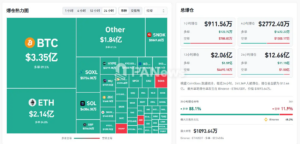
Hu reported a crypto fear-and-greed reading of 17, more than $1 billion in liquidations over 24 hours—nearly 90% of them long positions—and a decline in total crypto market capitalization from nearly $3 trillion at its October high to $2.3 trillion. Citing Glassnode, the article placed Bitcoin below an estimated $75,700 short-term-holder cost basis. Hu cautioned that extreme fear alone is not evidence of a bottom.
The article identified three near-term checks: the December Federal Open Market Committee decision, whether weekly spot Bitcoin ETF outflows abate, and how Bitcoin trades around $60,000. It also suggested watching AI and semiconductor shares and whether the reported 0.68 correlation between Bitcoin and the Nasdaq declines. Those are conditions for evaluating Hu’s interpretation, not a prediction that any particular rate decision, price level or market outcome will occur.