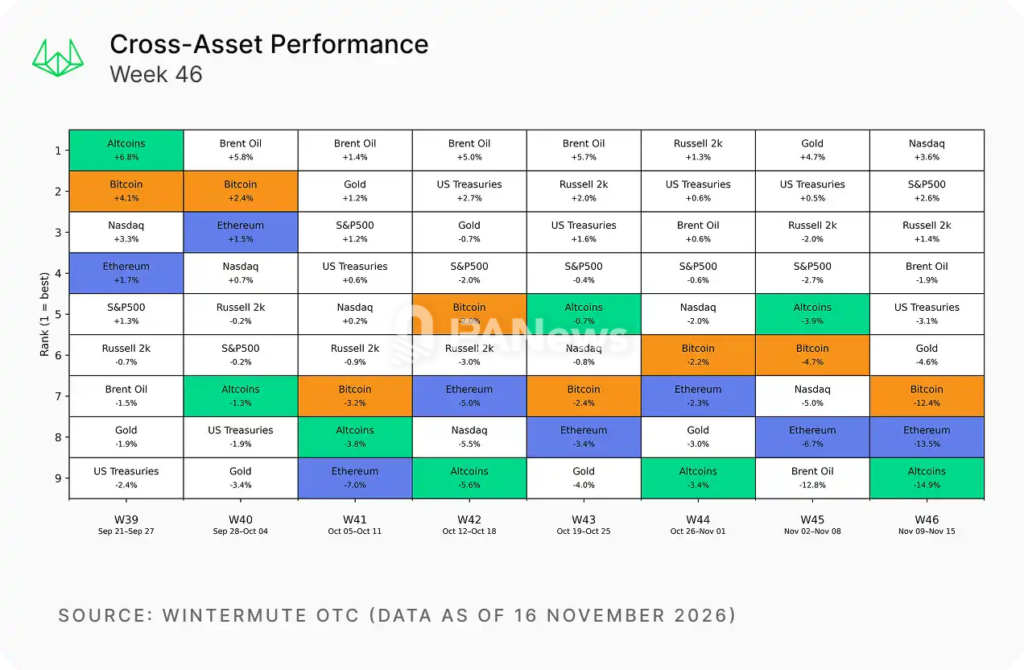
In a November 18, 2026, report, Wintermute argued that Bitcoin’s rebound from its July low had failed and that further declines toward the $50,000 range were possible. It did not claim to know where Bitcoin would bottom. Its near-term view rested on rising interest-rate expectations, weakening inflows and a break below long-term technical support.
Rates and funding pressure
Wintermute said Bitcoin fell 12.7% over the preceding week to $65,400, while the S&P 500 rose 2.5%. It attributed much of the pressure on crypto assets to a repricing of interest rates: US core CPI had risen 0.3% month over month for a third consecutive month, the US 10-year Treasury yield had closed at 5.15%, and markets were assigning roughly a 92% probability to a December Federal Reserve rate increase, according to its report. In Wintermute’s interpretation, Bitcoin’s lack of yield made it vulnerable as investors sold assets to raise liquidity.
The firm also pointed to a reversal in demand. It reported approximately $1.9 billion in cumulative net outflows from US spot Bitcoin ETFs so far in 2026, compared with net inflows of about $21 billion in 2025 and $35 billion in 2024. Stablecoin supply had fallen by an estimated $14 billion–$16 billion over the preceding 30 days, it said, while buying by digital-asset treasury companies was weakening. Wintermute further said MSCI planned to remove Strategy from an index after the November 30 close; that claim was part of its assessment of potential pressure on treasury-company financing.
Why Wintermute remains defensive
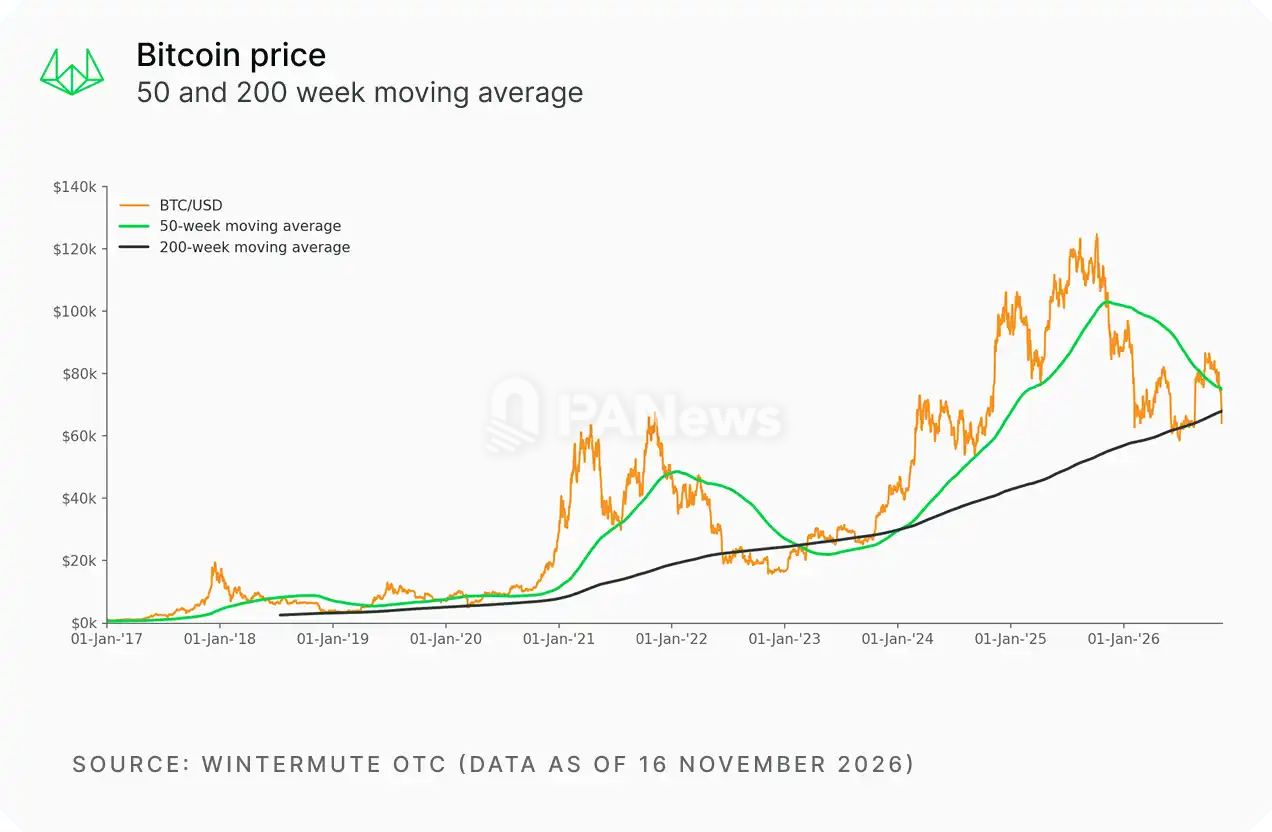
Bitcoin had fallen below the $80,000 level, its 50-week moving average and its approximately $68,000 200-week moving average, Wintermute said. It identified a recent $62,000 low as the first level to watch and $60,000 as an area with concentrated Deribit put-option positions. Those levels informed its view that a move toward $50,000 remained possible, not inevitable.
Wintermute cautioned against treating liquidations as proof of a bottom. It reported about $1.7 billion in crypto-market liquidations in the 24 hours through the preceding Sunday, roughly 80% of them long positions. In its view, the subsequent rebound was more consistent with short covering than with substantial new capital entering the market.
Wintermute said it would reconsider its short-term defensive stance if Bitcoin closed back above roughly $68,000 on a daily basis and spot Bitcoin ETFs recorded net inflows that day. A second possible change would be inflation or Fed information that led markets to stop pricing a January rate increase. The firm distinguished those near-term conditions from its more favorable long-term view of Bitcoin: a potentially improving long-horizon risk-reward profile, it said, would not establish that the short-term decline had ended.