
Bitcoin fell to around $62,100 on Sunday, November 15, 2026, before recovering to around $64,300 early Monday. In reporting published November 17 (+08:00), the Sunday low was described as Bitcoin’s lowest since July 14, following six consecutive weeks of losses. Roughly $2 billion in crypto derivatives positions were forcibly closed during the weekend slide, mostly bullish bets across cryptocurrencies—not Bitcoin positions alone.
Liquidations and ETF flows
CoinGlass figures for Saturday showed $1.9 billion in liquidations over one 24-hour period, including about $1.8 billion in bullish positions across cryptocurrencies. A liquidation occurs when an exchange closes a leveraged position after the funds supporting it can no longer cover its losses.
U.S. spot Bitcoin ETFs had recorded outflows before the weekend. Decrypt’s ETF tracker showed $185.4 million in net outflows on Friday, November 13, extending the streak to seven trading sessions and bringing withdrawals since November 5 to approximately $1.91 billion. Friday’s total included $143.5 million from BlackRock’s IBIT and $41.9 million from Fidelity’s FBTC.
Those flows indicate weaker ETF demand before Sunday’s decline, not redemptions during it: U.S. ETFs do not trade on weekends, while Bitcoin does. ETF flow figures also measure fund creations and redemptions, rather than every transaction between investors.
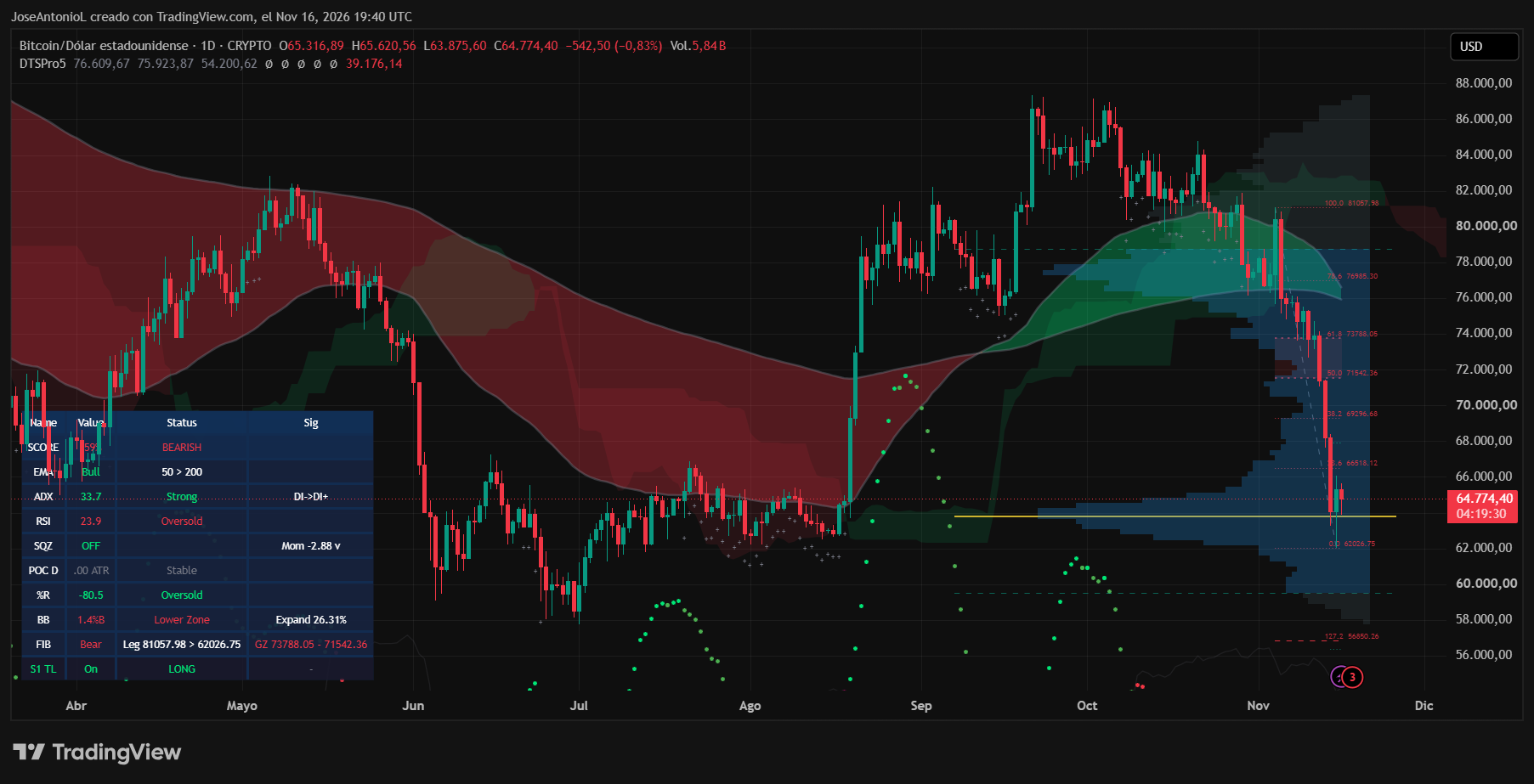
The levels and signals in view
The daily Relative Strength Index (RSI) was near 24, in oversold territory, but other indicators did not establish that the decline was over. The Average Directional Index was above 33, indicating a strong prevailing trend, with bearish directional pressure still dominant. Weekly RSI was near 38—weak, though not oversold.
Bitcoin bounced after approaching support around $62,000. The report identified potential resistance at $66,500–$67,200 and then around $69,300, based on Fibonacci levels on the chart. A decisive move below $62,000 would bring $60,000 back into focus; it was not presented as an inevitable next price.
The next evidence to watch was Monday’s U.S. ETF flow data and whether traders continued paying for downside protection. Ahead of the November 27 options expiration, $50,000 puts were among the contracts attracting the most recent trading activity. Those positions show interest in protection against further losses, not a confirmed forecast that Bitcoin will reach that level.