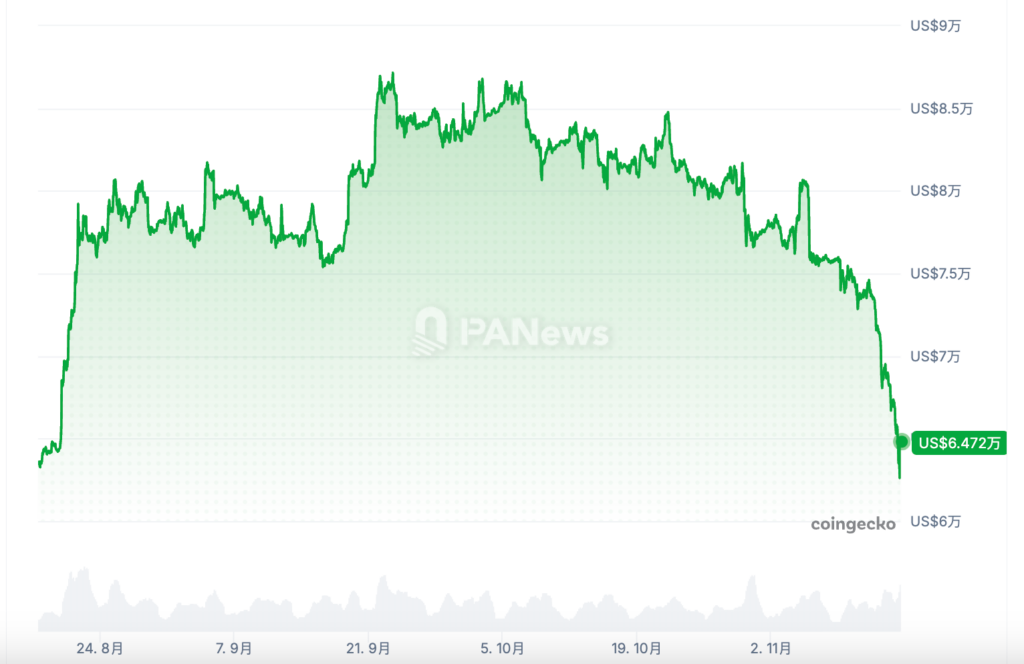
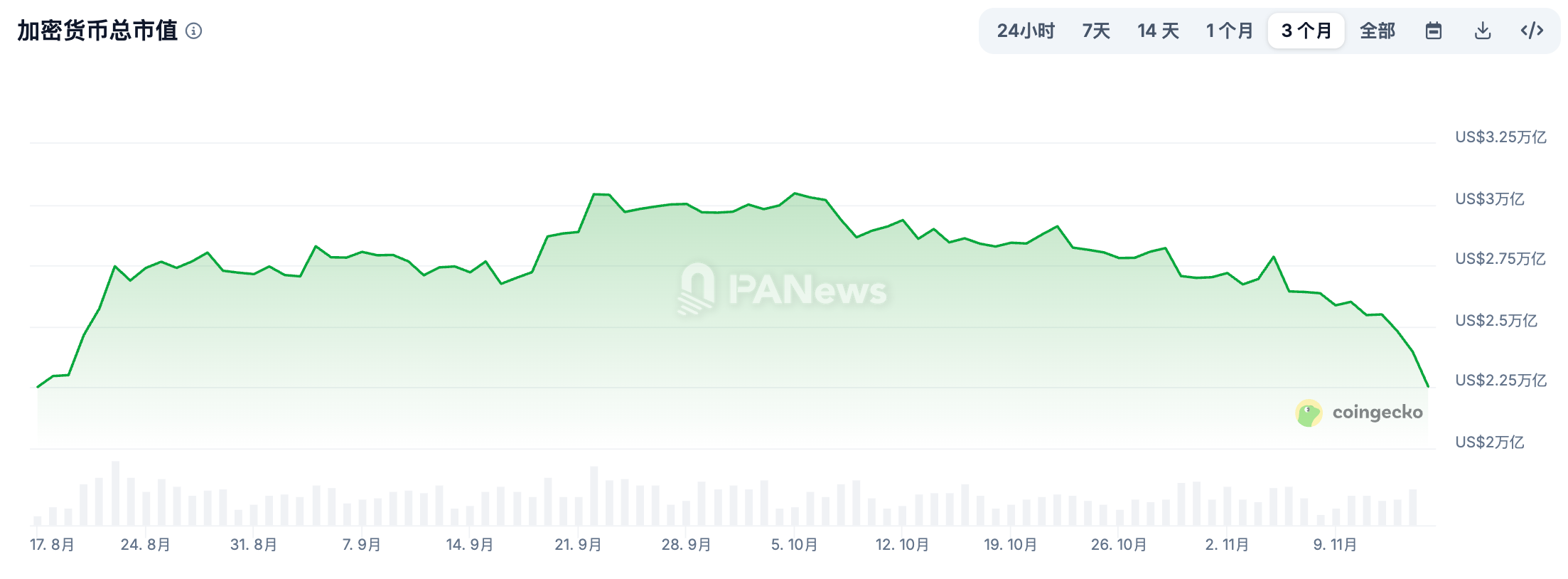
Bitcoin fell from about $69,000 on Saturday to a low of $62,000 on OKX by the morning of November 15, 2026, according to PANews’ reporting that day. CoinGecko data cited in the report put Bitcoin’s weekly decline at 14.5% and its drop from a September high of $87,000 at roughly 28.7%. The scale of the selling was clear; its immediate cause was not.
Where the selling appeared
Anchorage Digital research head David Lawant pointed to selling on US markets. A chart he shared showed cumulative volume delta—aggressive buys minus aggressive sells—of approximately −8,900 BTC across Coinbase’s main BTC spot pairs from November 9 to 14 UTC. The comparable figures were about −3,100 BTC on Binance, −700 BTC on Bybit and +1,400 BTC on OKX. Trader Flood also said the selling he observed was concentrated on Coinbase over the weekend. His suggestions about a possible large seller, hidden leverage or other undisclosed information were speculation, not established explanations.
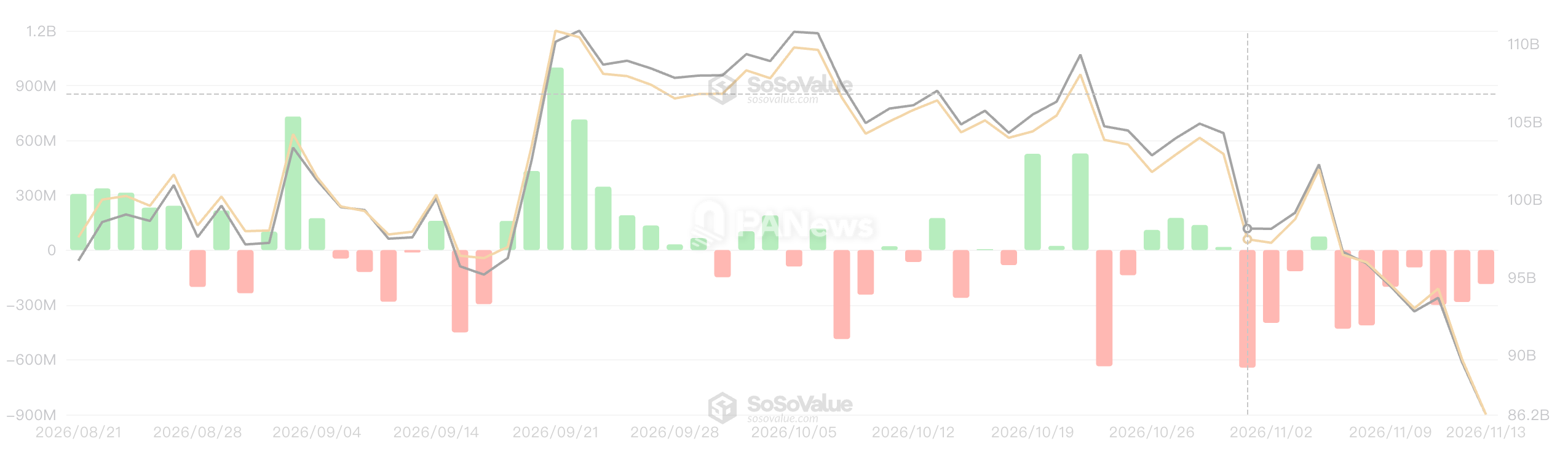
Demand indicators were weak in the period covered by the report. SoSoValue data showed US spot Bitcoin ETFs had recorded more than $2.55 billion in net outflows over three consecutive weeks, including more than $1.07 billion in the latest week. CoinGlass data put the Coinbase Bitcoin premium index at −0.07% after 53 consecutive days below zero.
Pressures and limits of the outlook
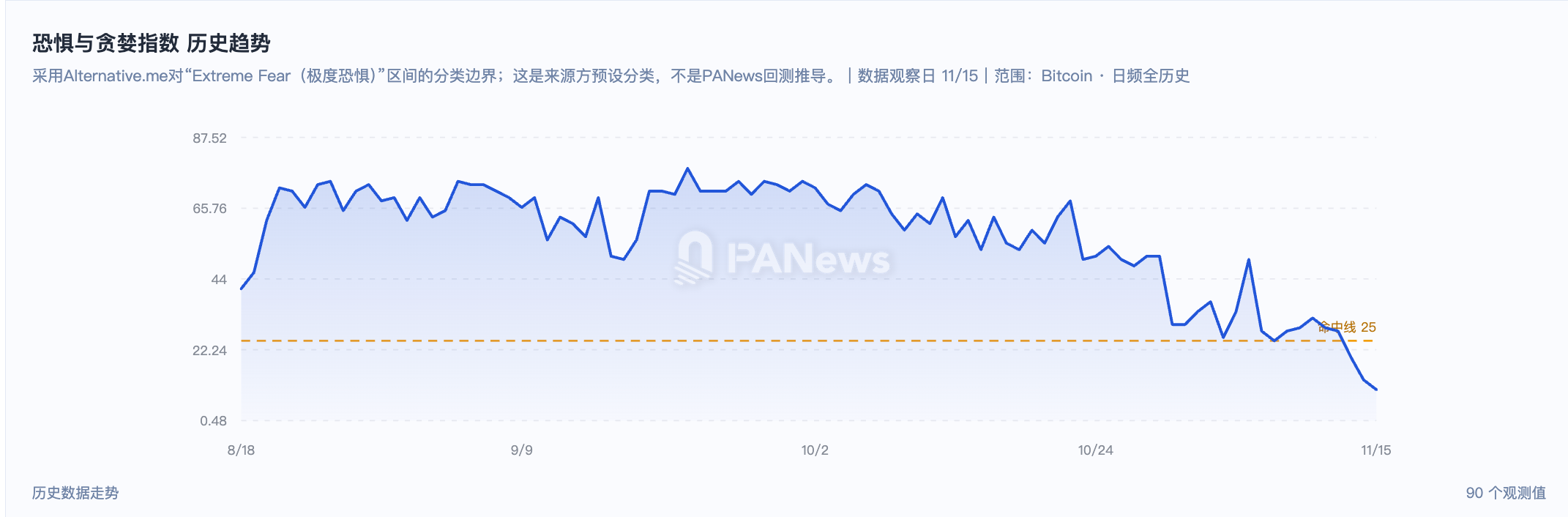
PANews cited tighter monetary-policy expectations as another possible pressure on risk assets. As of November 10, CME FedWatch put the market-implied probability of a 25-basis-point Federal Reserve rate increase in December at 88.5%, up from about 76.3% a week earlier. Higher yields could raise the opportunity cost of holding Bitcoin, but these figures do not establish what caused the weekend’s trades.
Liquidations may have amplified the move: CoinGlass recorded $2.024 billion in crypto-market liquidations over the preceding 24 hours, including $1.753 billion in long positions. Those are market-wide figures, not Bitcoin-only totals. PANews also reported uncertainty about the pace of US crypto legislation following the midterm elections; a change in congressional control would not, by itself, mean that stricter rules had been enacted.
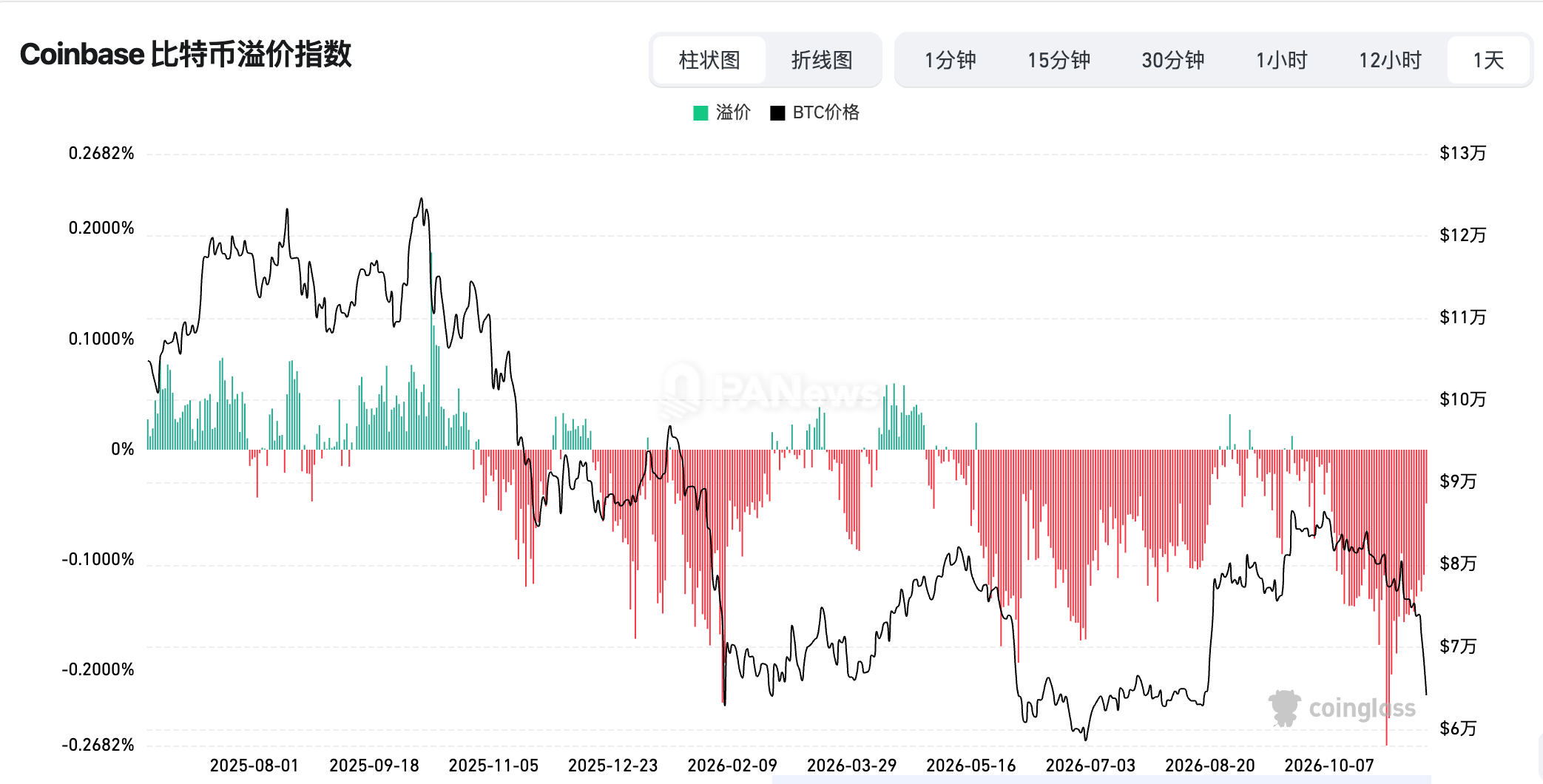
As reported on November 15, 2026, neither the selling data nor the proposed explanations showed when Bitcoin might stabilize. Whether spot demand returns and forced selling subsides remained open questions.