
As reported on November 18, 2026, bitcoin had fallen 14% over the preceding week after six straight weekly losses. K33 Head of Research Vetle Lunde said several measures pointed to conditions historically associated with local bottoms, while cautioning that similar recoveries had involved prolonged consolidation rather than an immediate rebound.
What K33 saw in the selloff
Lunde said bitcoin’s daily relative strength index (RSI) reached 19.95 on the preceding Saturday and had remained below 25 since Friday. Bitcoin had also fallen below its 200-week moving average following its worst weekly return since June 7. At one point, it traded about 8.5% below that average—a deeper deviation than the 7.3% recorded at June’s $58,500 low. K33 said 51.5% of circulating bitcoin was held at a loss.
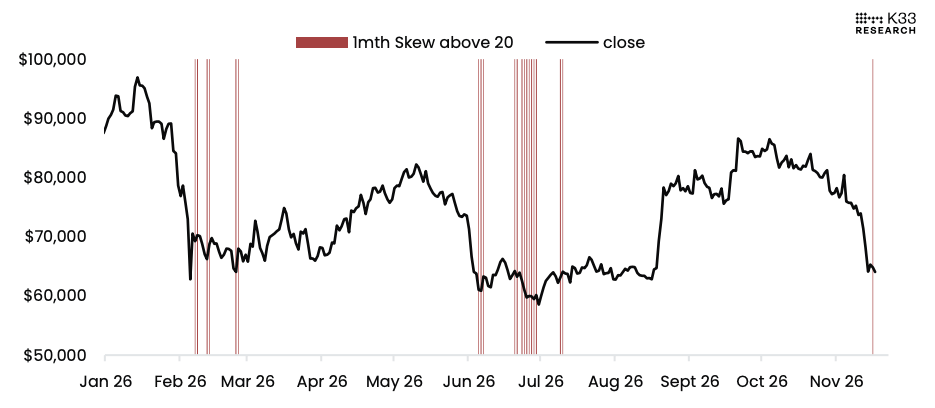
K33 also pointed to negative funding rates, leveraged ETF exposure at multi-year lows and demand for downside protection that pushed the one-month 25-delta options skew above 20 for the first time since July. Lunde said comparable skew readings had historically coincided with selling exhaustion near local bottoms. He called any entry below $70,000 “a gift from the market” and described the conditions as a potential opportunity for medium- to long-term investors. That was his assessment, not confirmation that a bottom had formed.
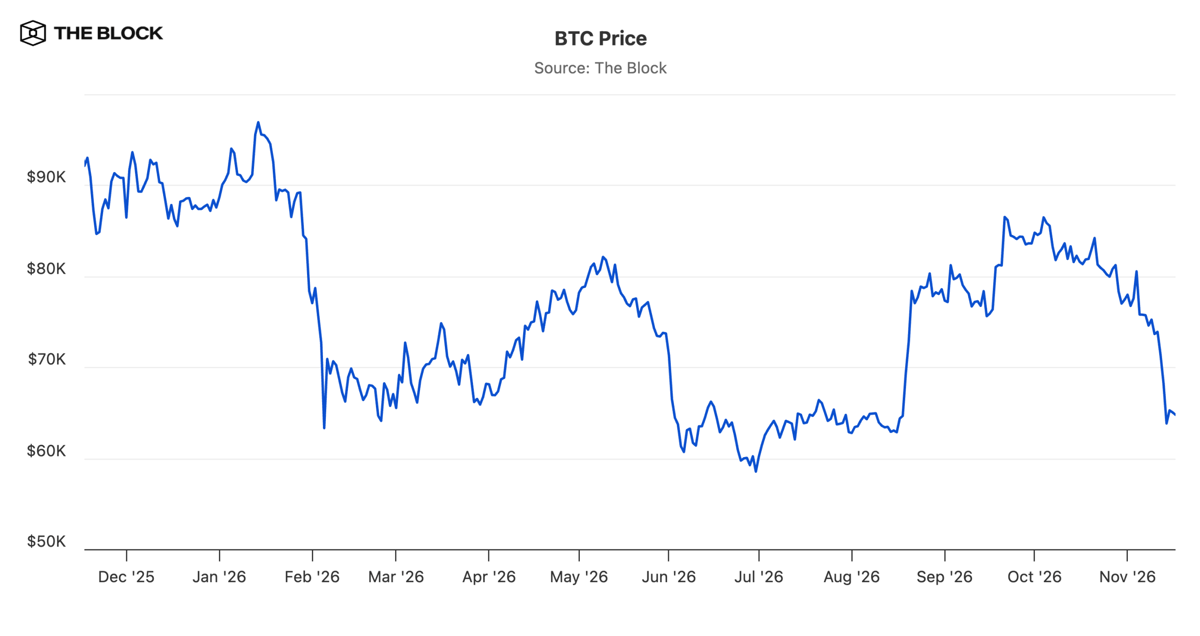
Bitcoin traded around $64,000 on the Wednesday of the report, down 1.1% over 24 hours. Lunde said it had recorded 13 consecutive days of lower daily highs by Tuesday.
Levels and conditions to watch
Glassnode said bitcoin touched $62,000 on Sunday, when investors realized losses on a scale last seen near the lows of 2022 and early 2023. Short-term holders added about 66,000 BTC in the $62,000–$66,000 range during the two days of heaviest selling.
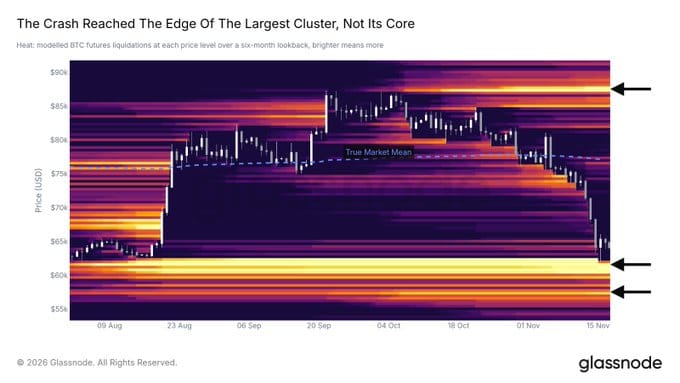
Bitcoin briefly traded at a premium on Coinbase near Sunday’s low after weeks spent mostly at a discount to the global price. Glassnode said a sustained premium would indicate continued U.S. buying, but the discount had returned by Tuesday. It also identified a concentration of Binance buy orders near $60,000—the largest at a single price since August—while noting that traders could withdraw those orders.
Glassnode said a daily close below $62,000 would put August buyers at a loss and expose a cluster of long liquidations. In that case, it identified June’s roughly $58,500 low and the $53,700 realized price—the average price at which circulating bitcoin last moved onchain—as levels to watch, not guaranteed destinations.
A macro explanation, according to Bitwise
In a Tuesday note, Bitwise Chief Investment Officer Matt Hougan attributed the selloff to a sharp change in Federal Reserve rate expectations. He said that after a November 10 report showed U.S. consumer prices rising a hotter-than-expected 0.4% in October, traders moved from pricing a 66% chance of a 25-basis-point December hike to treating one as certain. Hougan said thin weekend trading amplified the decline as roughly $2 billion in leveraged positions were liquidated.
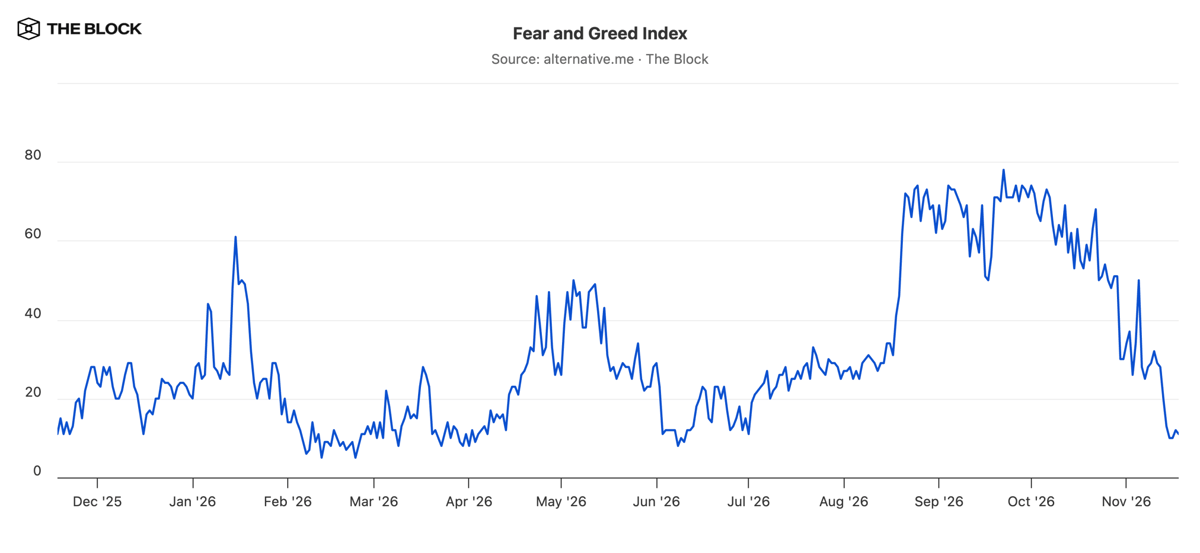
Hougan also noted that the Crypto Fear and Greed Index fell to 12 over the weekend, below its reading at bitcoin’s June low. He argued that aggressive rate hikes had been priced in and substantial leverage had been cleared. Whether that proves sufficient to stabilize bitcoin remained uncertain at the time of the November 18 report.