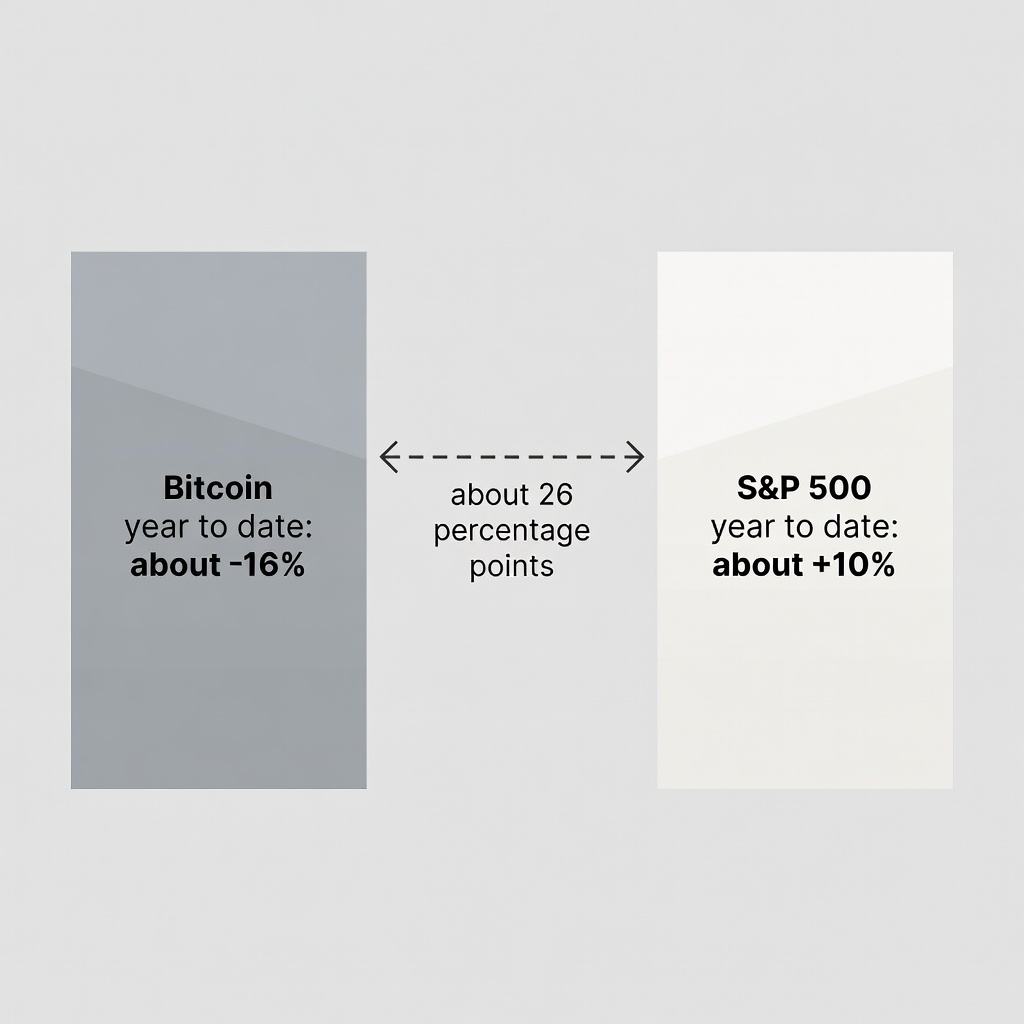
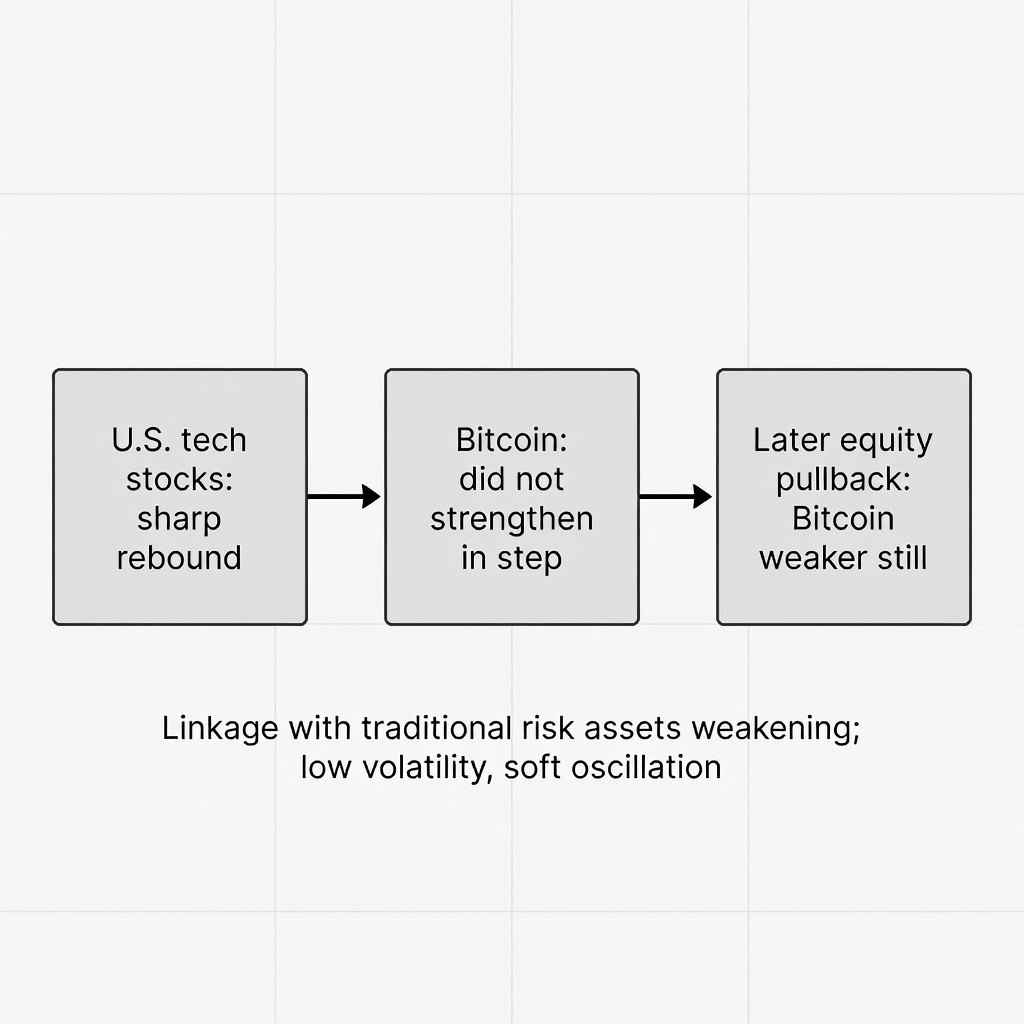
PANews reported on November 11, 2026, citing Bloomberg, that Bitcoin’s linkage with traditional risk assets was weakening. U.S. technology stocks had rebounded sharply, but Bitcoin did not strengthen in step. When equities later pulled back, Bitcoin was weaker still, and the report said it continued to show low volatility and a soft, oscillating pattern.
Year-to-date gap versus U.S. stocks
Data in that report put Bitcoin’s cumulative year-to-date decline at about 16% and the S&P 500’s rise at about 10%. The item’s headline frames that difference as Bitcoin trailing the S&P 500 by about 26 percentage points. Performance over the prior month and the prior six months had also lagged U.S. stocks. The piece gives those approximate results only; it does not publish index levels, a daily series, or the exact start of each window.
Pressures the cited analysis treats as possible
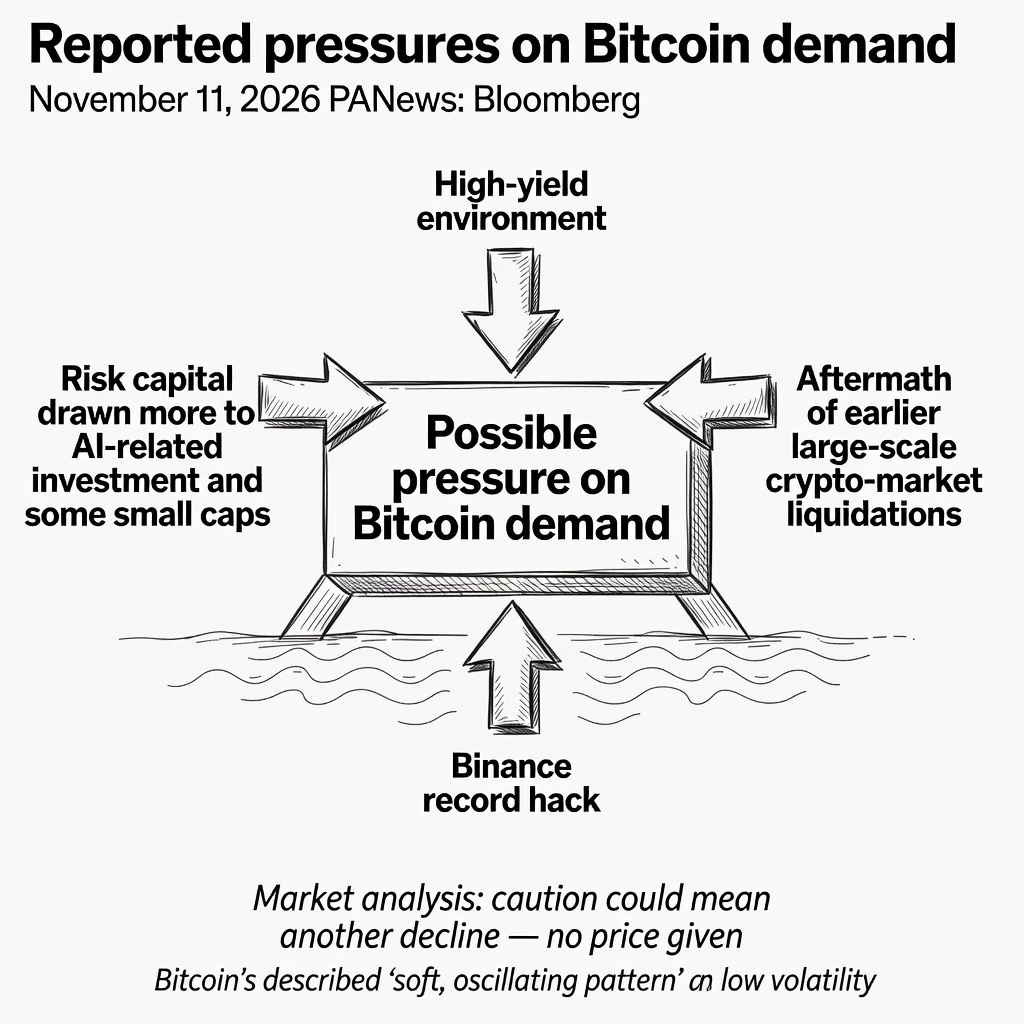
Market analysis in the report held that Bitcoin was no longer the only representative high-risk asset, and that AI-related investment and some small-cap stocks were drawing risk capital more strongly. It also pointed to a high-yield environment, the follow-on effects of earlier large-scale liquidations in the crypto market, and Binance’s record hack as factors that could pressure Bitcoin demand. Those are described as possible pressures, not as measured flows.
An attributed caution, not a desk forecast
The same market reading said cautious sentiment meant Bitcoin could face another decline at any time. That view is the analysis relayed by the November 11, 2026 PANews item from Bloomberg coverage. It states no price, probability, or fixed horizon, and this desk does not adopt it as a conclusion. The reported weakening is specific: Bitcoin missed the tech rebound and then lagged the equity pullback. The item does not claim the relationship has disappeared or supply a correlation figure.