
Bitcoin traded near $55,000 over the weekend before the November 23, 2026 report. In an analysis translated and edited by Odaily, Four Pillars research head @100y_eth argued that a long-term buying opportunity could be approaching—but also said Bitcoin might not have reached its cycle low.
The indicators behind the thesis
The analyst described $45,000–$55,000 as an attractive range if Bitcoin eventually enters another bull market. That condition matters: the analyst’s base case was for an AI-sector crisis to help trigger a final Bitcoin bottom sometime within the following year, followed by a reversal driven by US credit expansion and monetary easing. Neither the crisis nor the policy response was presented as a certainty.
Several historical measures informed that view:
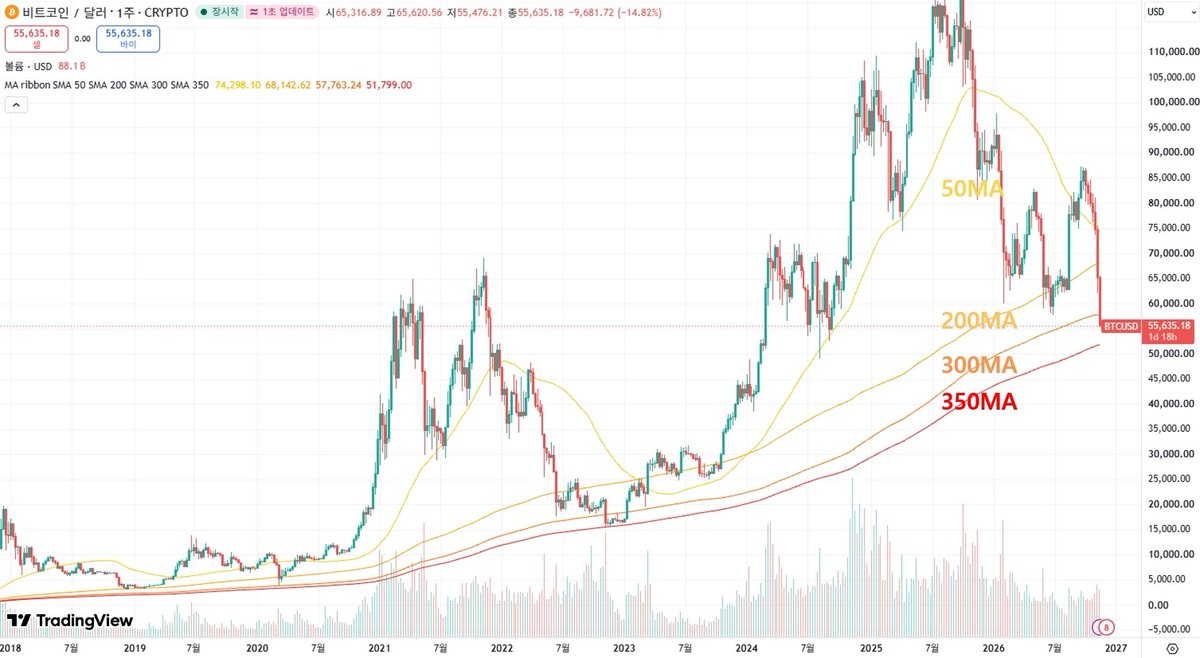
- Moving averages: The analysis said Bitcoin had fallen below its 200-week and 300-week moving averages and was approaching its 350-week average, then near $52,000. It put Bitcoin roughly 18% below the 200-week average, compared with roughly 20% below it during part of the 2022 downturn. The analyst noted that recovering above that average took about nine months in 2022; a comparable pattern could still involve further declines or an extended period of sideways trading.
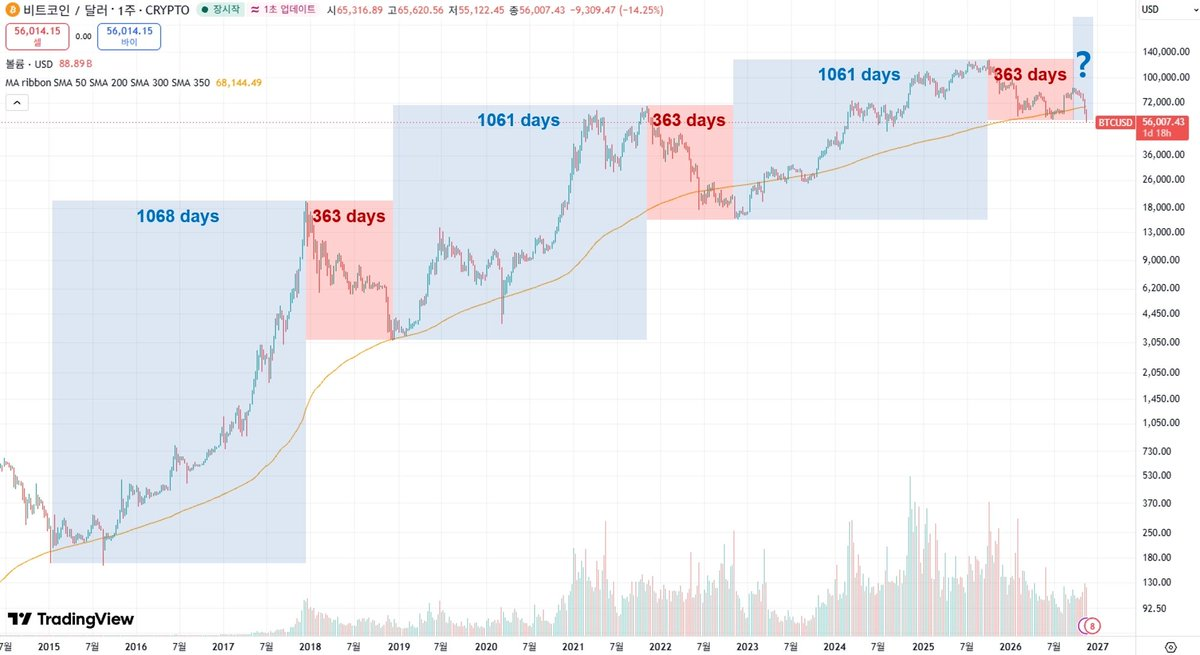
- Cycle timing: The analyst identified past rising phases of roughly 1,061–1,068 days followed by declines of about 363 days. The current decline, described later in the analysis as lasting 411 days, had already exceeded that historical window. The analyst said continued divergence would warrant reassessing the four-year-cycle theory.
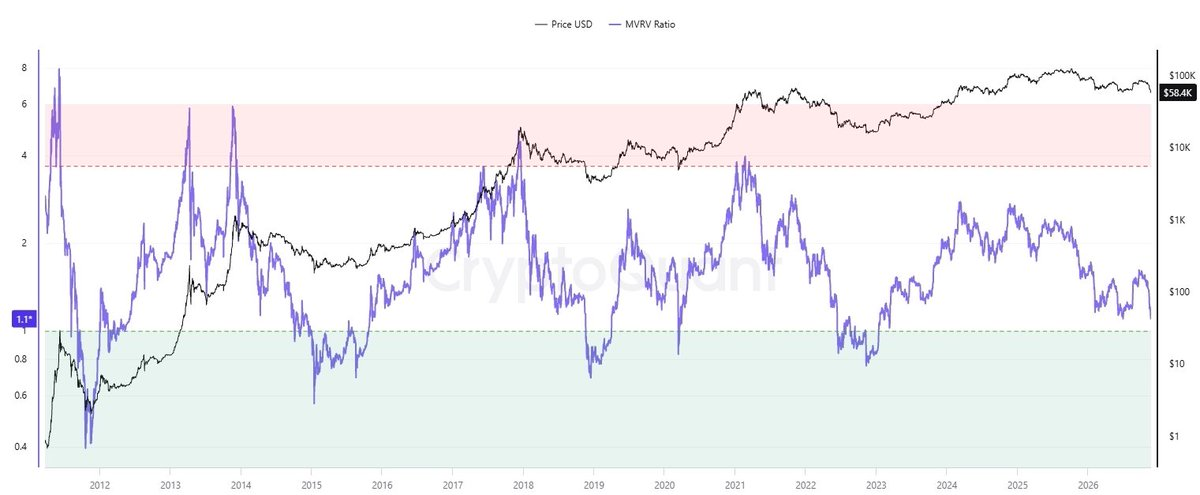
- MVRV: The ratio of Bitcoin’s market value to its realized value was close to, but had not fallen below, 1. The analyst said past cycles often reached a final low roughly one to six months after a move below 1. A possible bottom near $43,000 was an estimate conditional on realized value remaining unchanged and MVRV reaching about 0.8—not a measured support level.
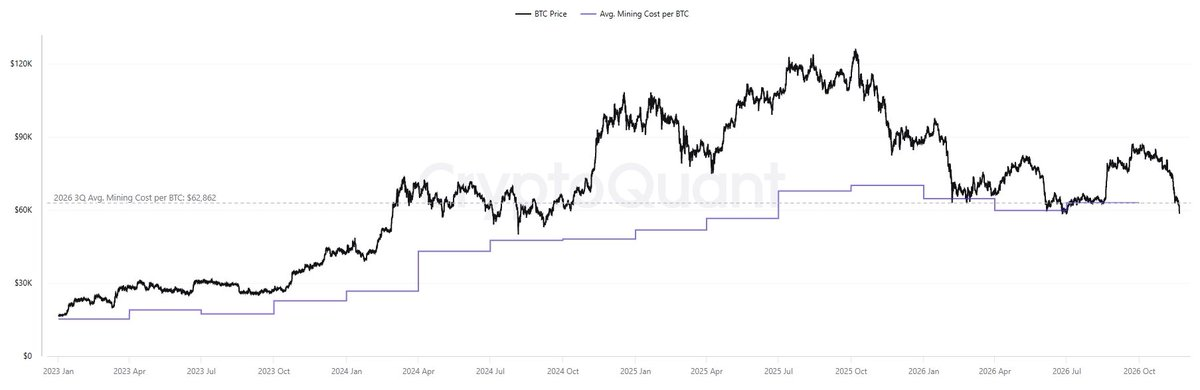
- Mining costs: Citing a CryptoQuant estimate based on a listed miner’s disclosures, the analysis put average production cost at approximately $62,862 per bitcoin in the third quarter of 2026. The analyst cautioned that mining cost is not a price floor, particularly as some miners diversify into AI data centers.
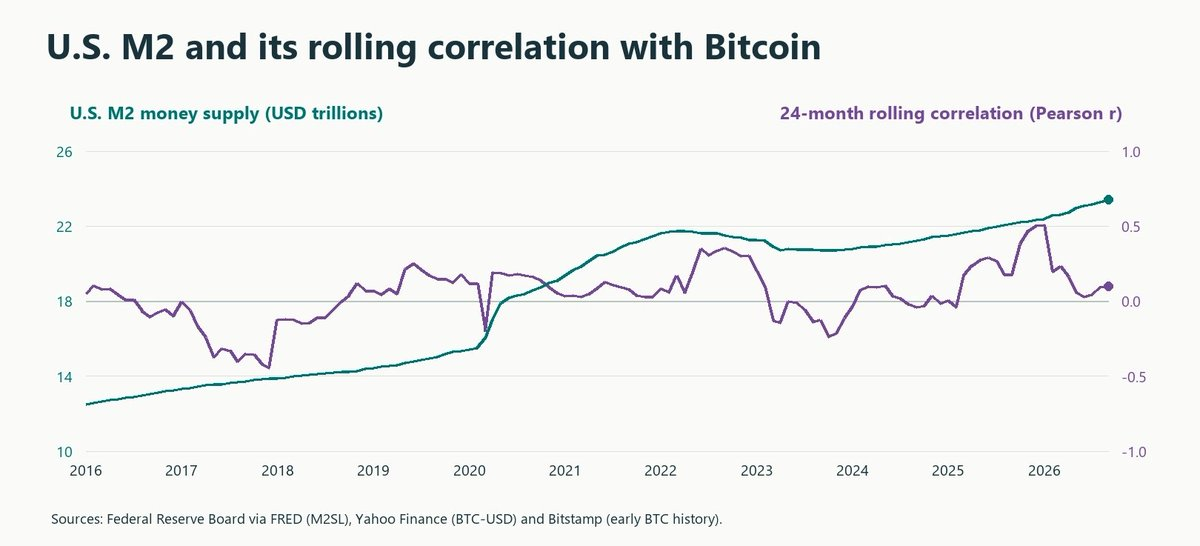
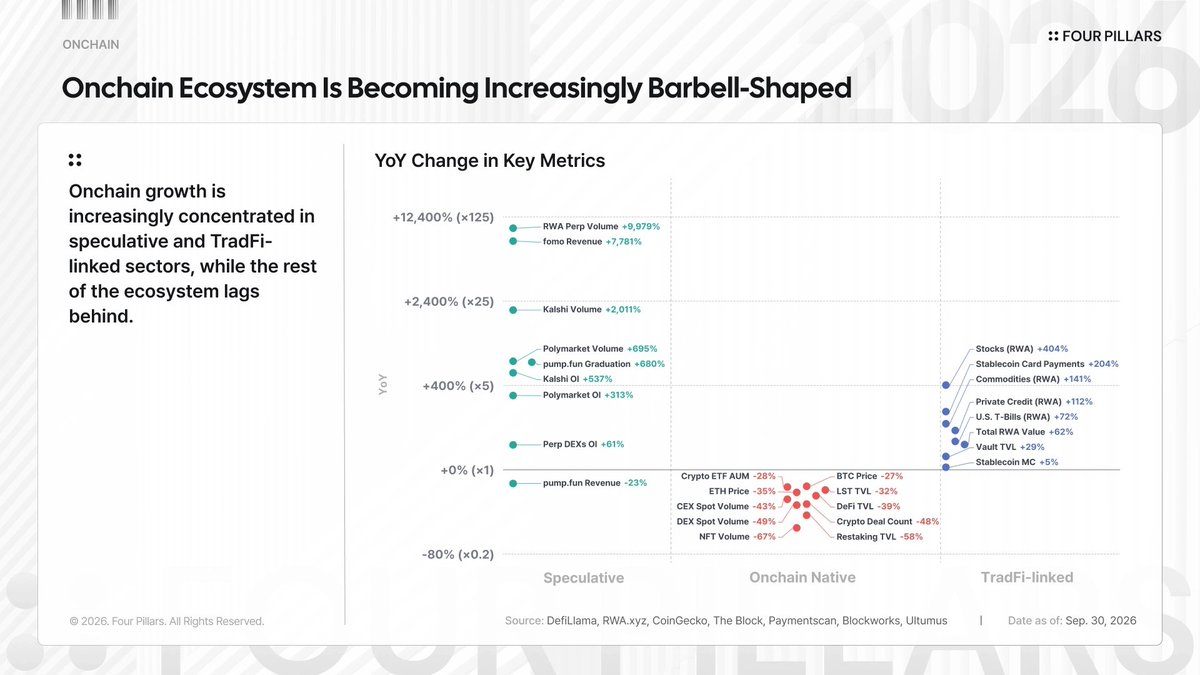
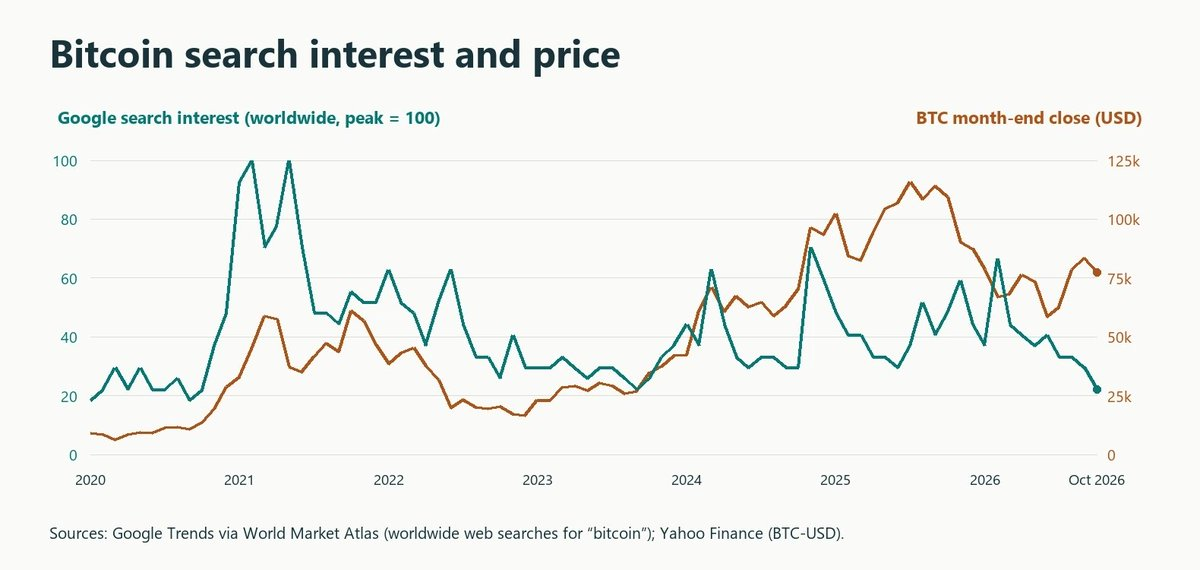
The analyst also pointed to weak Bitcoin search interest and negative crypto-market sentiment. Separately, the analysis said US M2 had expanded during 2026 while Bitcoin fell and its correlation with M2 approached zero. The analyst interpreted that divergence as possible undervaluation, while acknowledging an alternative: capital that might once have flowed to Bitcoin could instead be going to AI.

What could invalidate the outlook
Broader adoption of stablecoins and tokenized assets, another argument in the analysis, does not establish that Bitcoin will capture their value. Nor do past moving-average levels, cycle lengths or MVRV readings guarantee a bottom. The analyst also raised potential selling by digital-asset treasury companies, quantum-computing risks and selling of stolen funds as threats to a recovery.
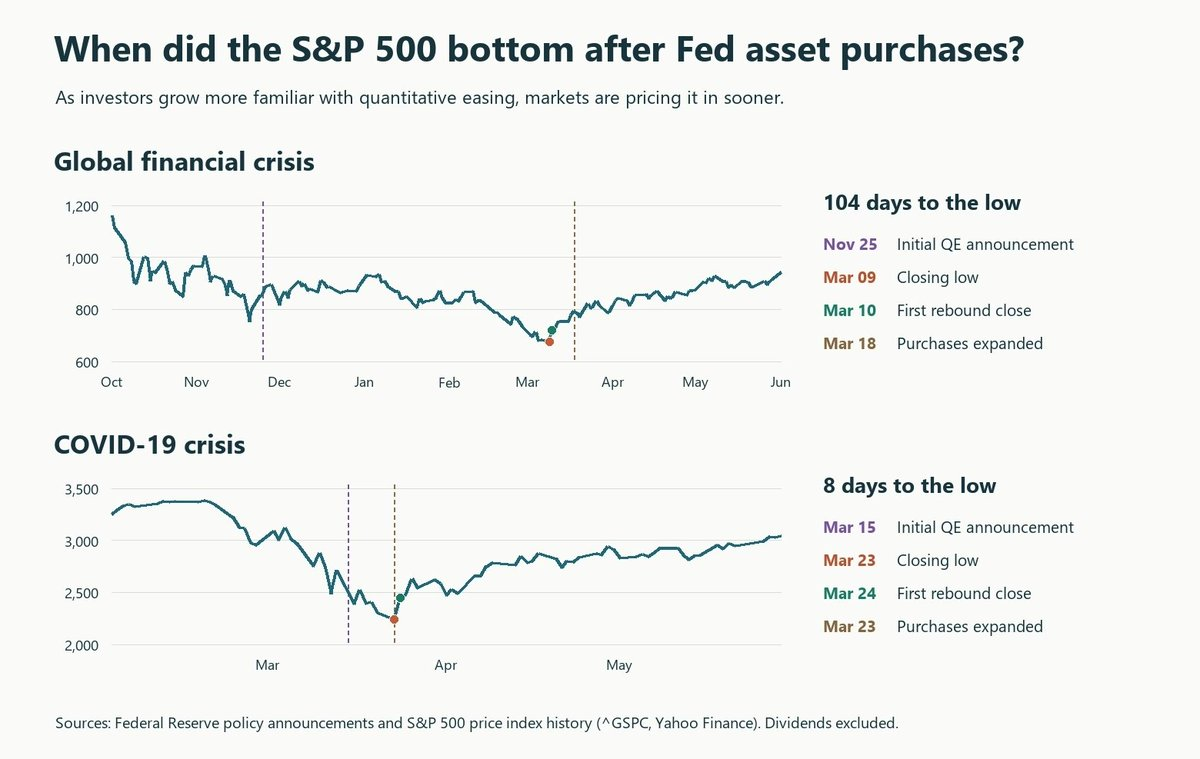
The proposed AI-to-Bitcoin link depends on a further assumption: that an AI downturn would prompt sufficiently strong US credit or monetary expansion to benefit Bitcoin. The analyst’s expectation of a rebound under those conditions remains a forecast, not an announced policy or an observed market outcome.