
In an analysis published on November 23, 2026, Four Pillars research head 100y.eth argued that Bitcoin was approaching a potential cycle-bottom window—but might not yet have reached its lowest price. The author reported seeing Bitcoin below $55,000 on a Saturday morning and described $45,000–$55,000 as an attractive long-term entry range if another bull market eventually follows. That is the author’s conditional outlook, not an established price floor.
What supports the bottom thesis?
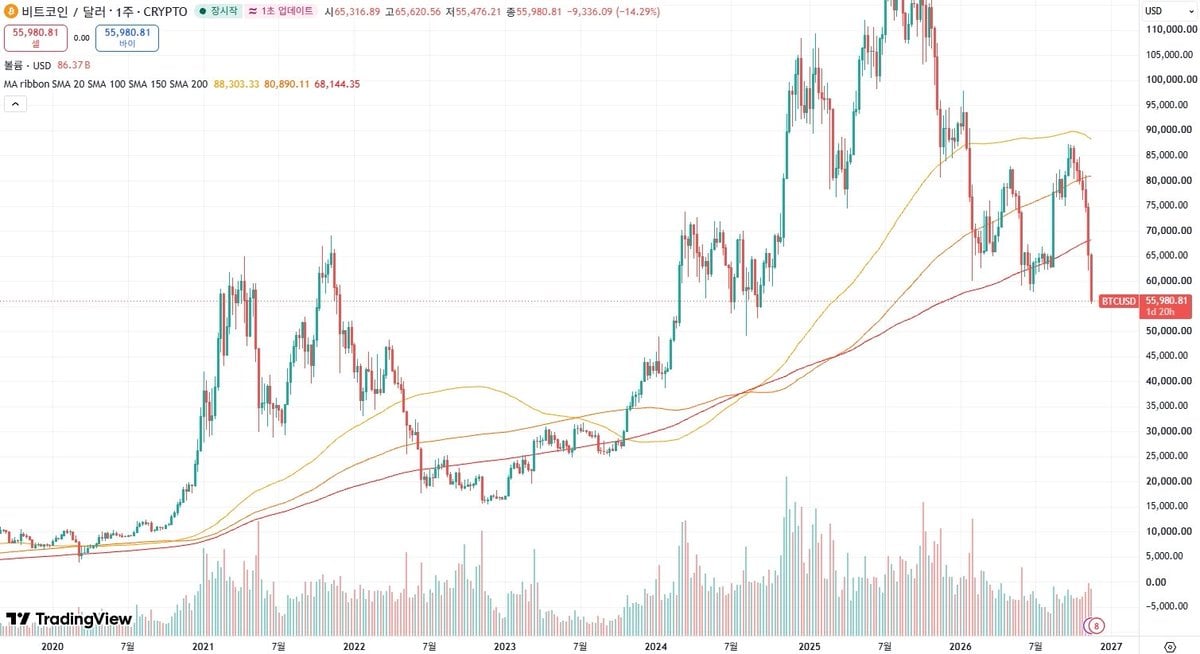
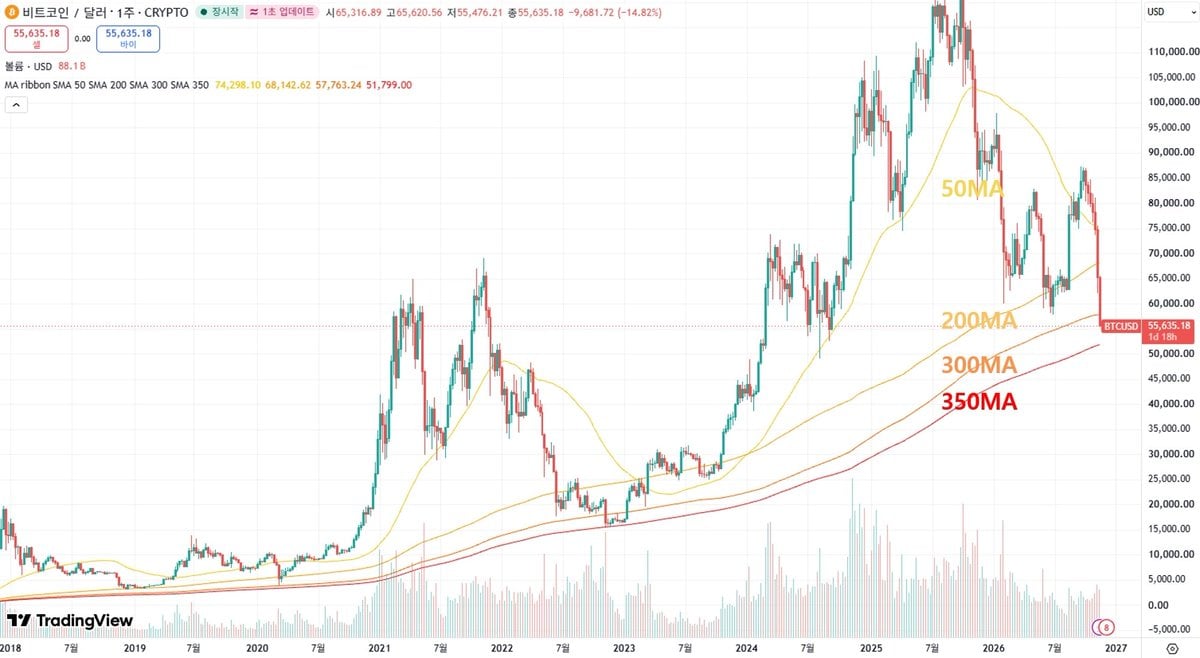
The author said Bitcoin had fallen below both its 200-week and 300-week moving averages and was approaching its 350-week average, which the analysis placed near $52,000 if reached in the short term. As a comparison, the author said Bitcoin traded roughly 20% below its 200-week average in June 2022, took about nine months to regain it and made a substantive upward breakout after about 14 months. In the November 2026 analysis, the reported gap below that average was about 18%. A similar deviation does not establish that the recovery will follow the same timetable.
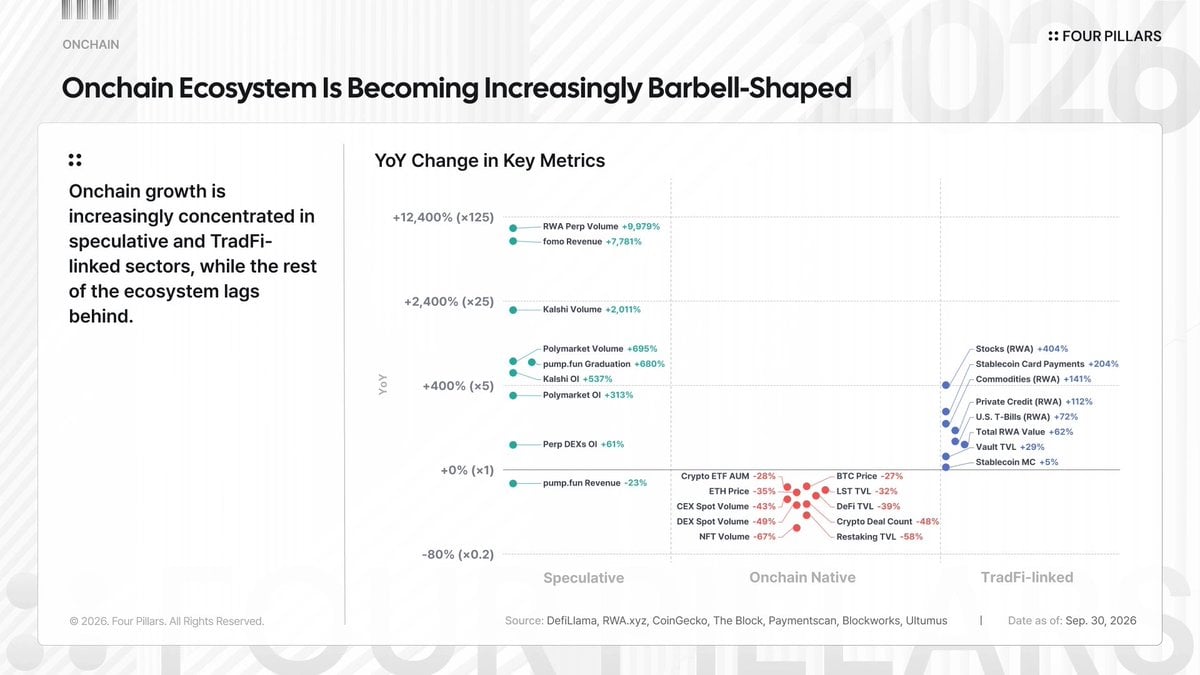
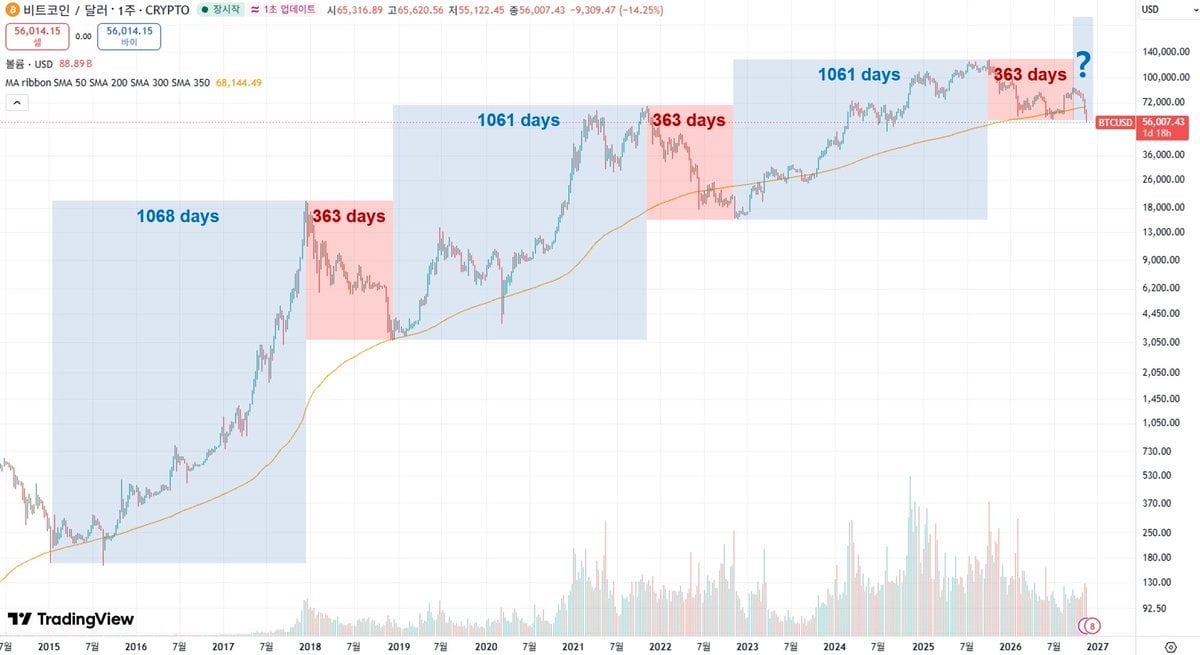
The analysis also questioned its own four-year-cycle framework. The author described previous stretches of roughly 1,061–1,068 days of gains followed by about 363 days of decline, but said the latest decline had already lasted approximately 411 days. If that longer downturn persists, the historical timing pattern may be less useful.
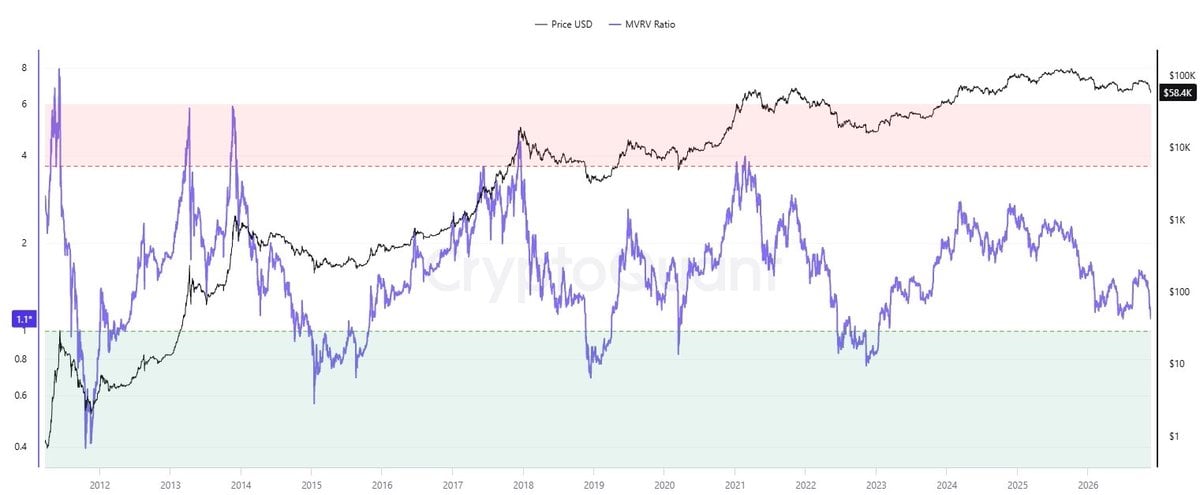
On-chain valuation offered another conditional signal. The author said Bitcoin’s market-value-to-realized-value ratio, or MVRV, was nearing—but had not crossed below—1. The analysis listed prior cycle lows of 0.395, 0.564, 0.691 and 0.760. Its estimate of a bottom near $43,000 depends on two assumptions: MVRV bottoms around 0.8 and realized value remains relatively stable. Neither outcome is assured.
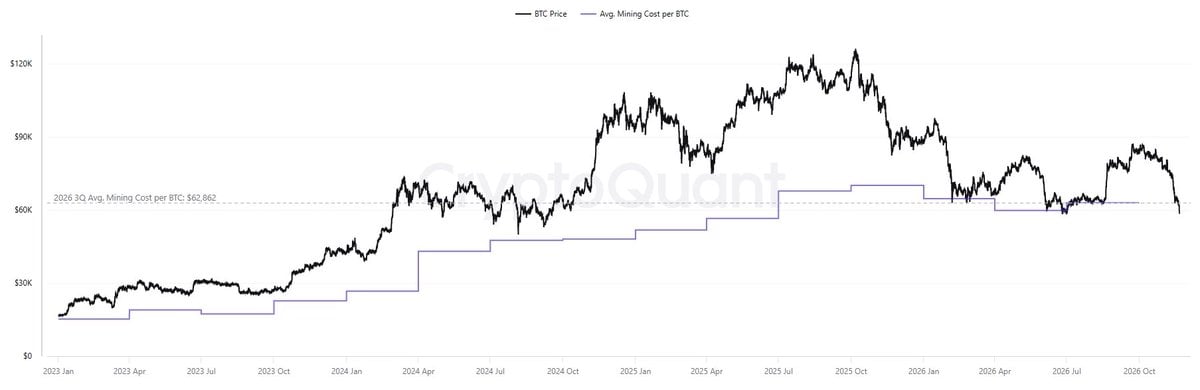
The author also cited a CryptoQuant calculation based on Marathon Digital disclosures that put the fully loaded cost of producing one Bitcoin at about $62,900 at the end of the third quarter of 2026. The analysis treated miner costs as a reference point, not a price floor, noting that mining companies’ expansion into AI data centers could change their incentives.
The macro scenario—and its limits
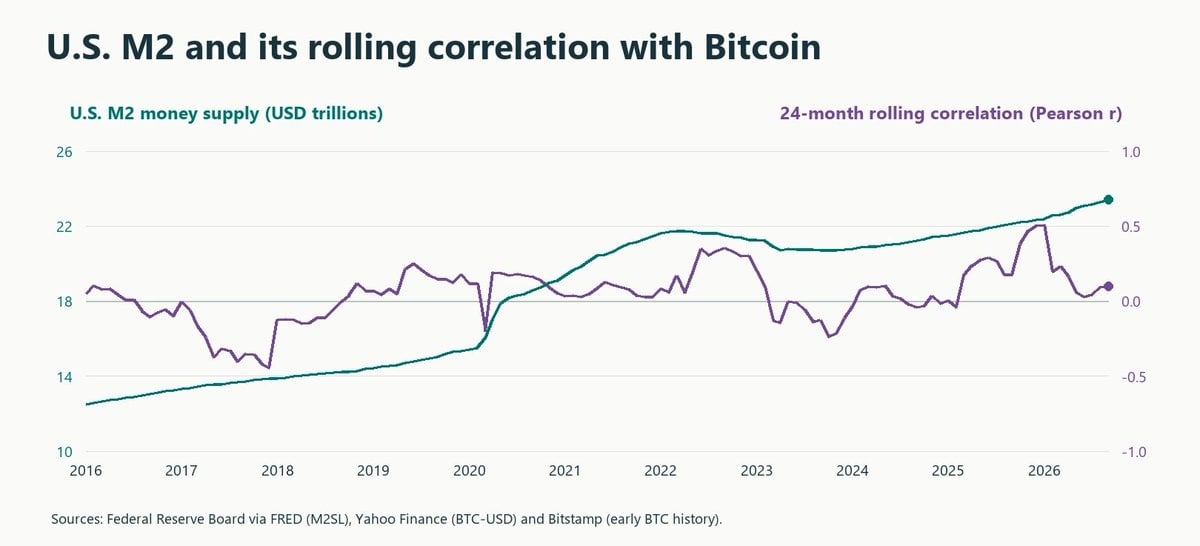
According to the author, US M2 had returned to modest expansion during 2026 while Bitcoin declined, with their rolling correlation approaching zero. The author interpreted that divergence as undervaluation. An alternative reading acknowledged in the analysis is that marginal capital may be flowing toward AI assets rather than Bitcoin; the divergence alone cannot settle the question.

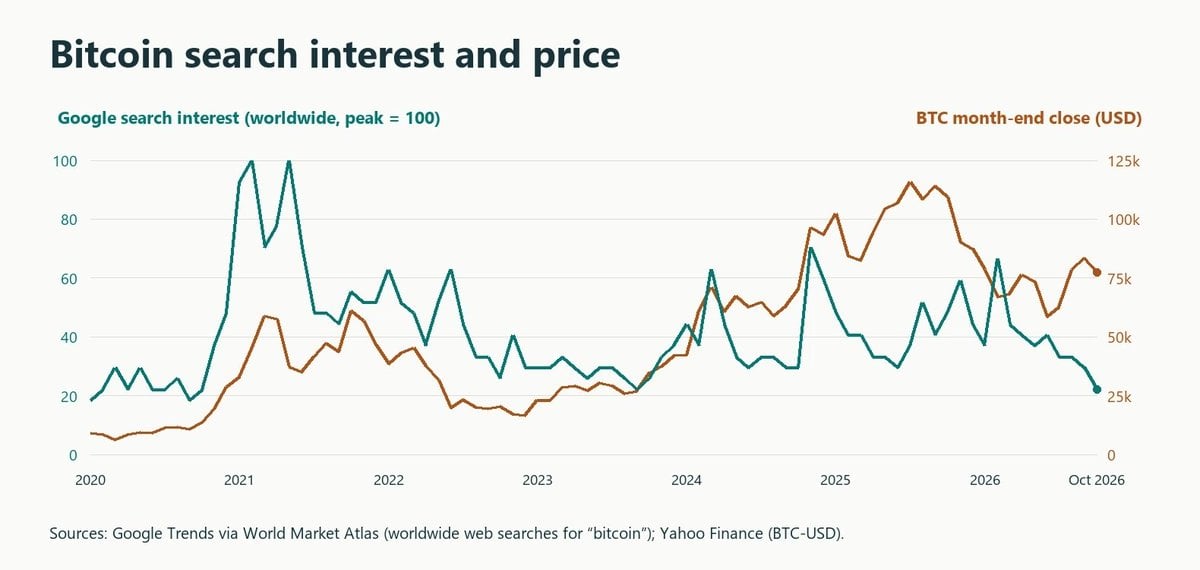
The author’s baseline scenario was an AI-sector crisis within the following year, followed by US credit expansion or monetary easing and a Bitcoin recovery. The analysis also argued that continued AI investment could expand private credit without a crisis. Both paths are forecasts about financing and policy responses, not announced Federal Reserve or government actions. In making the crisis case, the author cited claims about Nvidia leadership and US politics; those claims should be understood as part of the author’s argument, not independently established developments here.
The outlook’s central uncertainty is whether conditions that previously coincided with Bitcoin bottoms will still matter in the same way. The author explicitly allowed for further downside, a failed four-year-cycle pattern and the possibility that growing use of stablecoins and tokenized assets would not translate into value for Bitcoin. The proposed six-to-12-month bottoming window therefore depends on both a future Bitcoin recovery and a macro response that had not occurred at the time of the analysis.