As of November 26, 2026, the dispute over the UK’s proposed guidance on decentralized finance (DeFi) centered on whether regulated crypto platforms could continue to offer access to independent protocols. The Financial Times reported that the Financial Conduct Authority (FCA) had cited the $6.3 billion Binance hack in support of tighter restrictions. Katie Harries, Coinbase’s head of European policy, described the approach as “creating a prohibition.” Her warning concerned access through regulated firms, not a proposed ban on DeFi software.
What the Binance breach shows
The FCA published its consultation, GC26/7, on October 21, eight days before the October 29 breach at Binance. The proposal addressed how regulated firms should manage cybersecurity, operational resilience and financial crime risks when connecting customers to decentralized protocols.
The theft occurred at a centralized exchange. DeFi entered the picture afterward: Bitcoinist previously reported that wallets linked to the hackers moved nearly $600 million in Ethereum through cross-chain protocols. In a November 16 written response to Parliament, the UK government confirmed it was working with the FCA and other authorities to assess the incident’s implications for the UK.
Tracing stolen funds across protocols is a different task from preventing unauthorized access to exchange assets. The transfers help explain why regulators examined DeFi in connection with the theft, but they do not establish that tighter rules on DeFi access would have prevented it.
Where a platform’s responsibility ends
The FCA had clarified that a genuinely decentralized protocol falls outside the regime when no identifiable person conducts regulated activities through it. A platform connecting customers to an on-chain lending market, however, may control the customer interface without controlling the smart contracts that govern lending. The question is which risks the platform can reasonably manage.
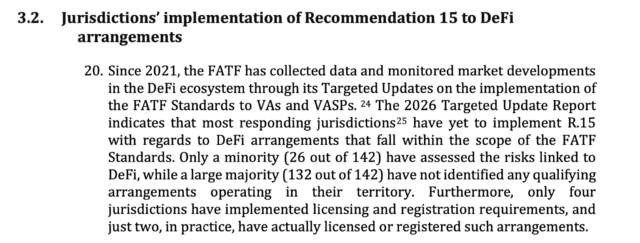
International practice offered few precedents. In July 2026, the Financial Action Task Force reported that only four of 142 surveyed jurisdictions had implemented licensing or registration requirements for qualifying DeFi arrangements. Just two had licensed or registered any such arrangements.
If compliance proved impractical, regulated firms could withdraw access even while the underlying protocols remained available. Some customers might then use protocols directly or turn to overseas providers, where protections could differ. Neither outcome was certain.
The consultation closed on November 18. As of the November 26 report, final DeFi guidance was expected before October 25, 2027, the scheduled start of the UK’s broader crypto regime. The obligations firms would face when offering access to protocols they did not control had not yet been settled.