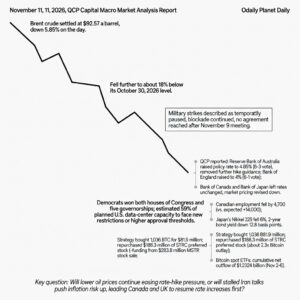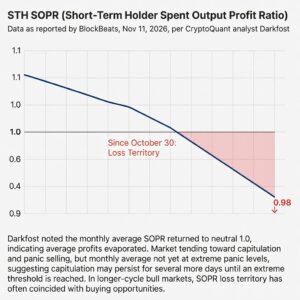
A hotter-than-expected U.S. inflation report sent crypto prices lower on Tuesday, with bitcoin falling below $74,000 as analysts warned of a possible slide under $70,000.
October inflation and the price move
October’s Consumer Price Index rose 0.4%, above forecasts of 0.3%, while core CPI increased 0.3% against expectations of 0.2%. The print raised concerns about the Federal Reserve’s interest rate outlook.
Bitcoin was trading at $73,363, down 1.6%. Ether was down 3.7% to $2,042, and Solana dropped more than 4% to trade below $83.
Support levels named by analysts
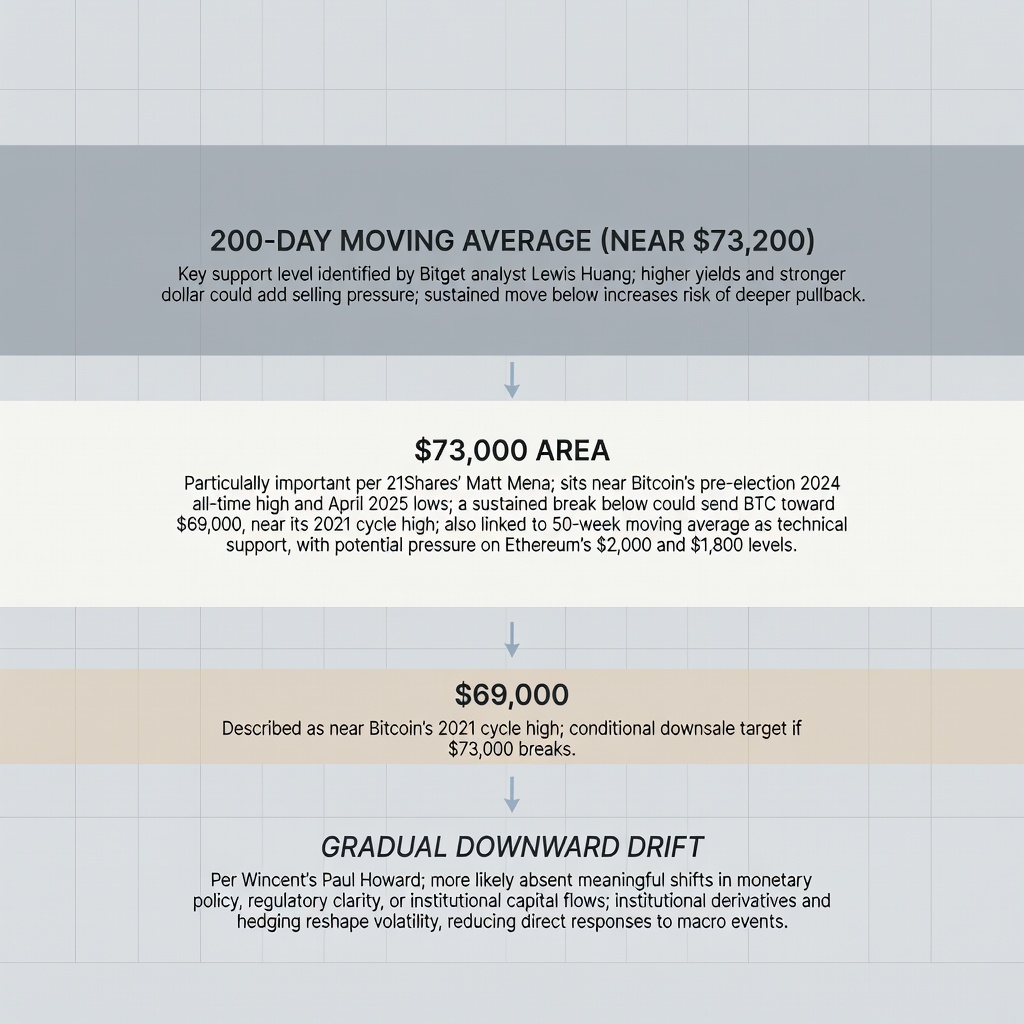
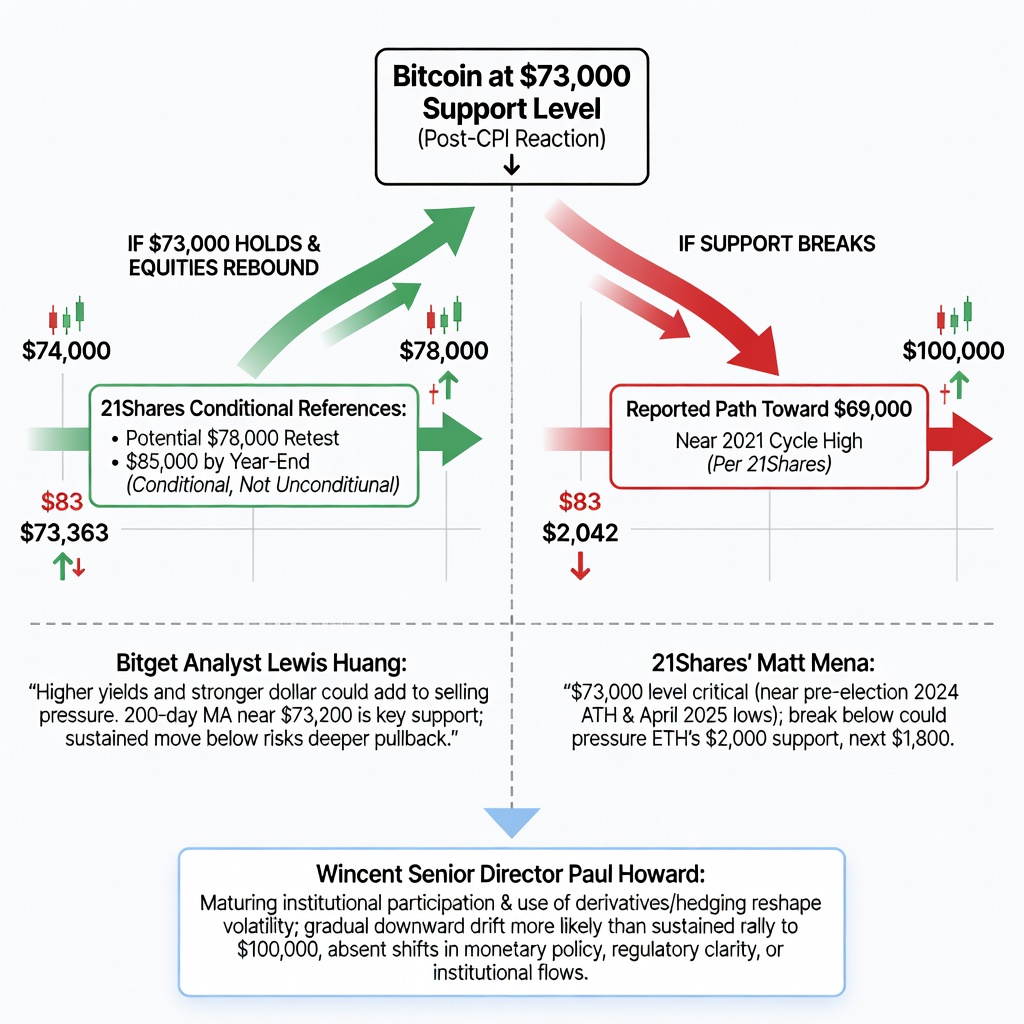
Bitget analyst Lewis Huang said higher yields and a stronger dollar could add to recent selling pressure. He called the 200-day moving average near $73,200 a key support level and said a sustained move below it could increase the risk of a deeper pullback.
Matt Mena, senior crypto research strategist at 21Shares, said the $73,000 level is particularly important because it sits near bitcoin’s pre-election 2024 all-time high and its April 2025 lows. A sustained break below $73,000 could send bitcoin toward $69,000, which would place it near its 2021 cycle high, Mena said; 21Shares noted the same downside reference. Mena also pointed to the 50-week moving average as technical support and warned that a break could put further pressure on Ethereum’s $2,000 support, with $1,800 the next level he cited.
Conditional paths, not a single forecast
An upside case remains only if bitcoin holds $73,000 and equities continue to rebound. In that setting, 21Shares sees bitcoin potentially retesting $78,000, with a move above that level putting $85,000 in reach by year-end. Those figures are the firm’s conditional references, not an unconditional target.
November has historically been bitcoin’s strongest month, with an average return of 34.4% and a median gain of 8.6% since 2010.
Beyond the immediate macro pressure, Wincent senior director Paul Howard said maturing institutional participation and greater use of derivatives and hedging are reshaping bitcoin’s volatility profile. In his words, institutional investors are increasingly able to manage exposure through options and other risk-management instruments rather than buying or selling the underlying asset in response to every macroeconomic development. Absent a meaningful shift in monetary policy, regulatory clarity, or institutional capital flows, Howard said bitcoin is more likely to experience a gradual downward drift than a sustained rally toward the $100,000 level previously anticipated.
Original article: The Block, source timestamp 2026-11-11T03:37:16+08:00. The price reaction described above is the Tuesday move reported in that piece after the October CPI release, not a later development.