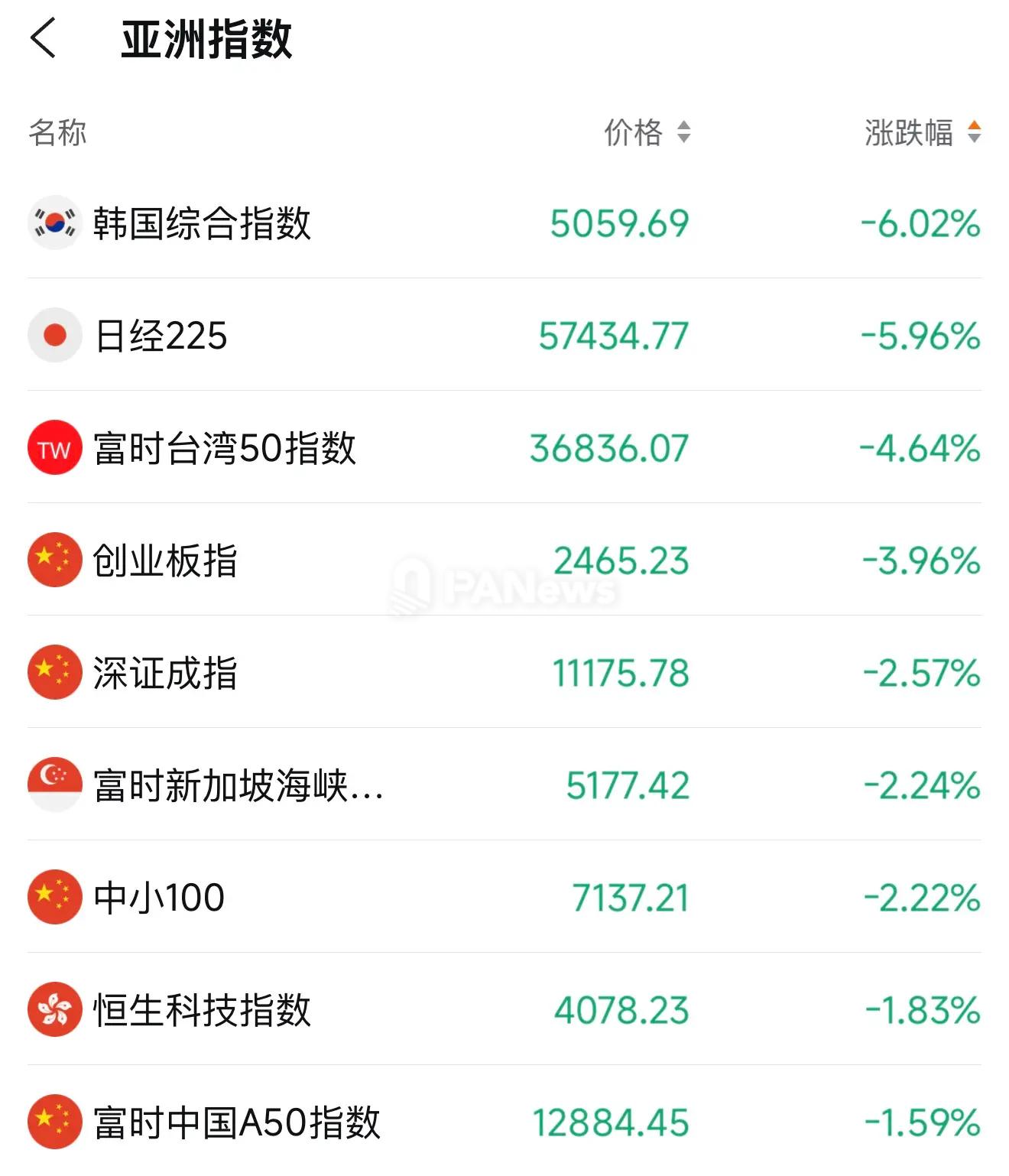
In a report published November 7, 2026, Bitcoin was described as falling below $76,000 during a selloff that began in US technology stocks and spread to Asian equities and crypto markets. The move reversed Bitcoin’s gain above $80,000 after the US midterm election results became clear. The report linked the broader selloff to investors reassessing AI data-center construction prospects following Democratic victories in both chambers of Congress.
Bitcoin flows and liquidations
CoinGecko data cited in the report showed Bitcoin dropping from $78,767 to $75,986 within an hour on November 5, as the Nasdaq fell nearly 4% intraday. Bitcoin later traded below $76,000, its lowest level since mid-September, and fell below its 50-week moving average. Its roughly 6% decline that Thursday was comparable to the Nasdaq Composite’s 5.52% drop, though smaller than the Philadelphia Semiconductor Index’s 12.25% fall.
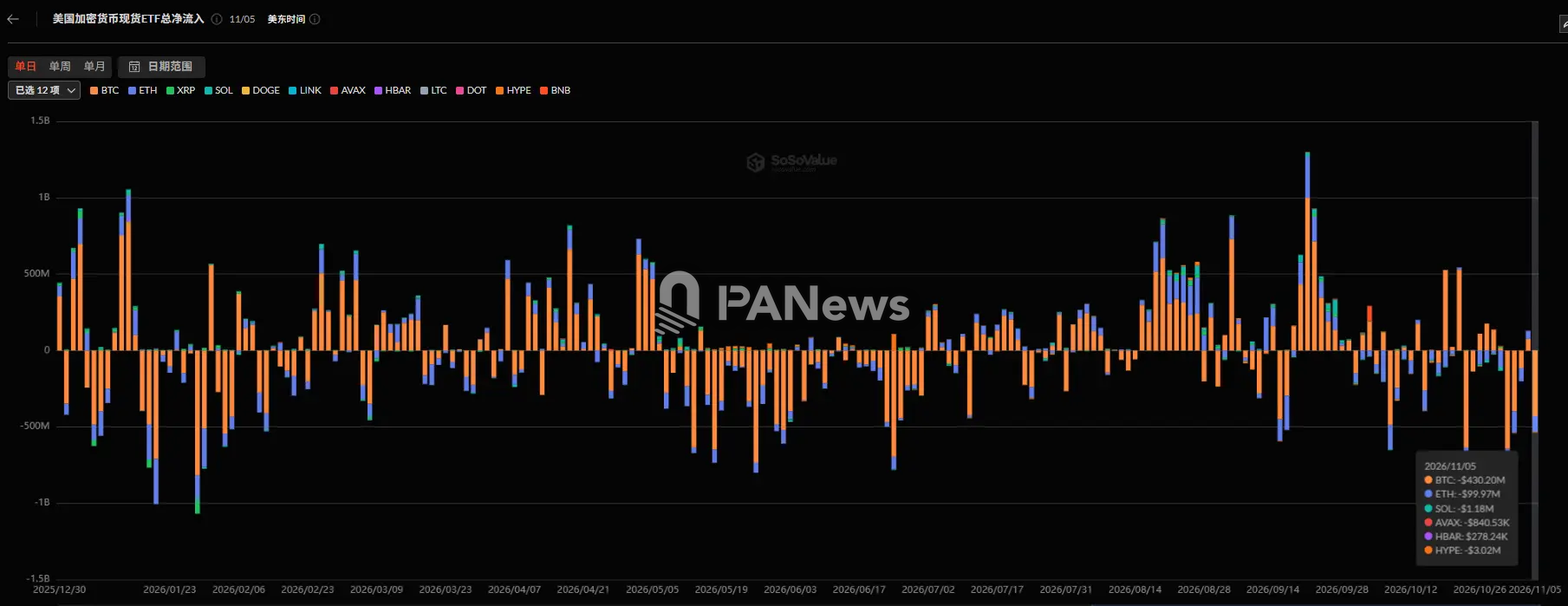
According to SoSoValue, US spot Bitcoin ETFs recorded $430 million in net outflows on November 5, with none of the 12 funds posting a net inflow. Their combined net assets fell from $102.26 billion the previous day to $96.65 billion. Over the five trading days beginning October 30, the ETFs recorded approximately $1.51 billion in net outflows; November 4 was the only day with a net inflow.
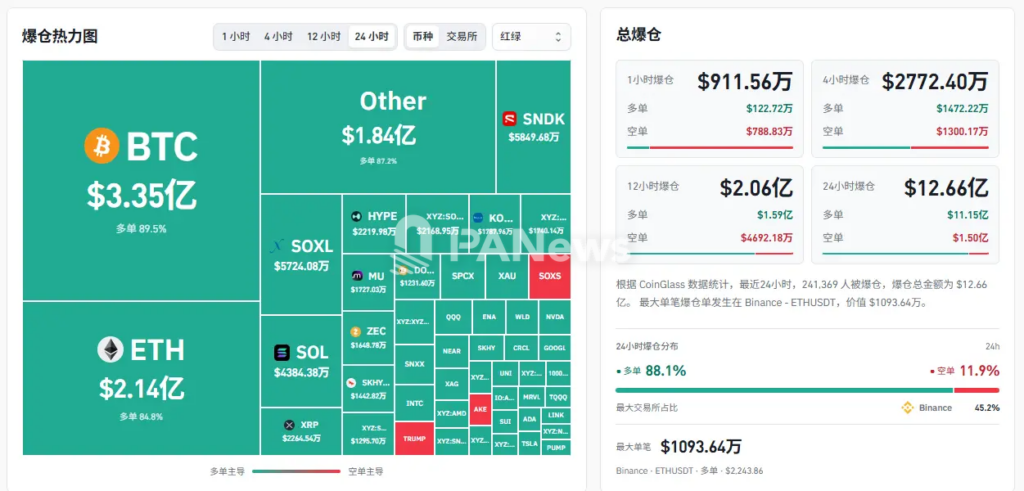
CoinGlass data put crypto-market liquidations over the preceding 24 hours at $1.251 billion, including $1.108 billion in long positions, or 88.6% of the total. Those figures describe market-wide derivatives activity, not Bitcoin liquidations alone. The report also cited CryptoQuant analyst Darkfost’s earlier observation that Bitcoin’s 90-day rolling correlation with the S&P 500 was above its historical average. The simultaneous declines and ETF outflows show Bitcoin’s exposure during this episode, but do not establish a single cause for its price move.
Miners’ AI exposure and the policy outlook
US-listed Bitcoin miners that had expanded into AI data centers also fell sharply. On November 5, the report recorded declines of 18.68% for Bitdeer, 16.95% for IREN, 16.47% for CleanSpark, 14.62% for Cipher, 14.48% for MARA and 13.85% for TeraWulf. Bernstein lowered price targets for seven miners, citing tighter financing and uncertainty over Texas data-center development; it identified IREN, Riot and Cipher as having the greatest Texas exposure among the companies it covered. This gives those miners a potential sensitivity to AI infrastructure plans distinct from Bitcoin’s price alone.
The report also described a possible shift in US crypto legislation, not an enacted change. It said French Hill would relinquish the House Financial Services Committee chairmanship in January after Democrats won the House, while Maxine Waters was a leading candidate to succeed him. Elizabeth Warren was expected to lead the Senate Banking Committee. Stifel strategist Brian Gardner assessed that the CLARITY bill could not advance during the remainder of the current Congress and saw little chance of a bipartisan compromise in the next one. Those were his forecasts, not settled legislative outcomes.
At the time of the report, investors were watching a possible Anthropic IPO roadshow in the week of November 9 and Nvidia’s earnings scheduled for November 17. Their relevance to Bitcoin was conditional: the report presented them as tests of sentiment toward the AI trade that had coincided with the cross-market selloff, not as direct Bitcoin catalysts with known outcomes.